Introduction: The Invisible Engine Behind India’s Clean Energy Revolution
Every time a textile factory in Coimbatore powers its looms on clean energy, or a steel plant in Vizag avoids a ₹15 crore annual electricity bill by switching to solar — there is an entity working quietly in the background that most energy buyers never think about.
That entity is the Independent Power Producer, or IPP.
India is racing toward its 500 GW renewable energy target by 2030. The government is not building most of that capacity. Neither are the factories consuming the power. The overwhelming majority of India’s new solar and wind capacity is being built, owned, and operated by IPPs — private companies whose entire business model is based on generating electricity and selling it at a profit over 20 to 25 years.
And yet, when a plant head or CFO sits across the table from a solar energy company, they rarely know whether they are talking to an IPP or an EPC contractor — and that distinction changes everything about who owns the plant, who bears the risk, and what kind of contract they should sign.
This guide exists to close that knowledge gap.
Whether you are a CFO evaluating a Power Purchase Agreement, an industrialist exploring zero-capex solar options, an investor looking at India’s renewable sector, or a developer trying to understand the full IPP ecosystem — this is the complete, India-specific guide to how the IPP business model actually works.
What you will learn in this article:
- What an IPP is, in plain language
- The four revenue streams IPPs use to make money
- How IPP costs and profitability work
- The six-phase lifecycle of an IPP project
- Types of IPPs operating in India — from utility-scale giants to C&I-focused RESCO developers
- The regulatory framework that governs IPPs
- How NST operates as an IPP in Tamil Nadu and South India
Calculate Your Industry’s Savings Potential
Request a customized industrial electricity savings analysis from our renewable energy experts.
What Is an Independent Power Producer?
An Independent Power Producer (IPP) is a private sector company that builds, owns, and operates power generation assets — and sells the electricity those assets produce to buyers such as government utilities (DISCOMs), large industrial companies, or the open electricity market.
The key word is independent. Unlike government-owned power companies (called GENCOs, such as NTPC or state-level generation companies), an IPP operates purely in the private sector, without being vertically integrated into the transmission or distribution of electricity.
Unlike an EPC (Engineering, Procurement, Construction) contractor, who builds a power plant and then hands it over to the owner, an IPP keeps ownership of the plant and earns revenue from it over the entire project life. The IPP does not charge for construction — it charges for electricity.
This seemingly simple distinction — selling kilowatt-hours instead of selling a construction contract — completely changes the financial structure, the risk profile, the regulatory obligations, and the relationship between the energy company and its customers.
A simple analogy: An EPC contractor is like a builder who constructs a house and gets paid when the keys are handed over. An IPP is like a property developer who builds the house, retains ownership, and collects rent every month for 20 years. The builder’s job ends at commissioning. The developer’s job has just begun.
The Core IPP Model: Build, Own, Operate, Sell
The IPP model rests on a straightforward economic logic:
1. Build a power generation asset (solar farm, wind farm, hybrid plant)
2. Own that asset through a Special Purpose Vehicle (SPV) company
3. Operate the asset and manage it for 20–25 years
4. Sell the electricity generated to buyers under long-term contracts or on the open market
The IPP earns revenue every unit of electricity it produces. Its costs include construction financing, operations, maintenance, and land. The difference — if the project is well-structured — is profit distributed to equity investors and used to service the project debt.
This model aligns the IPP’s interests directly with long-term performance. Because the IPP continues to own the plant, it has a financial incentive to ensure the plant runs well for decades, not just on commissioning day. This is fundamentally different from an EPC contractor, whose financial obligation to the project typically ends after the warranty period (usually 2–5 years).
Revenue Stream #1: Long-Term PPA Tariff (The Backbone of IPP Income)
The most important revenue stream for any Indian IPP — especially in the renewable energy segment — is the long-term Power Purchase Agreement, or PPA.
A PPA is a contract between the IPP (the electricity seller) and the buyer (a DISCOM, an industrial company, or a group of consumers) that fixes the price of electricity for a period of 20 to 25 years. The tariff — expressed in ₹ per kilowatt-hour (kWh) — is either fixed at the contract signing date or follows a pre-agreed escalation formula.
How PPA tariffs are determined:
For utility-scale projects selling to DISCOMs or government agencies, tariffs are discovered through competitive bidding. Central agencies such as SECI (Solar Energy Corporation of India) and NTPC float tenders, developers bid the lowest tariff at which they are willing to supply electricity, and the lowest qualifying bid wins. Indian solar PPA tariffs through this route have fallen dramatically over the past decade, reaching as low as ₹2.05–₹2.50/kWh for large utility-scale solar in recent years.
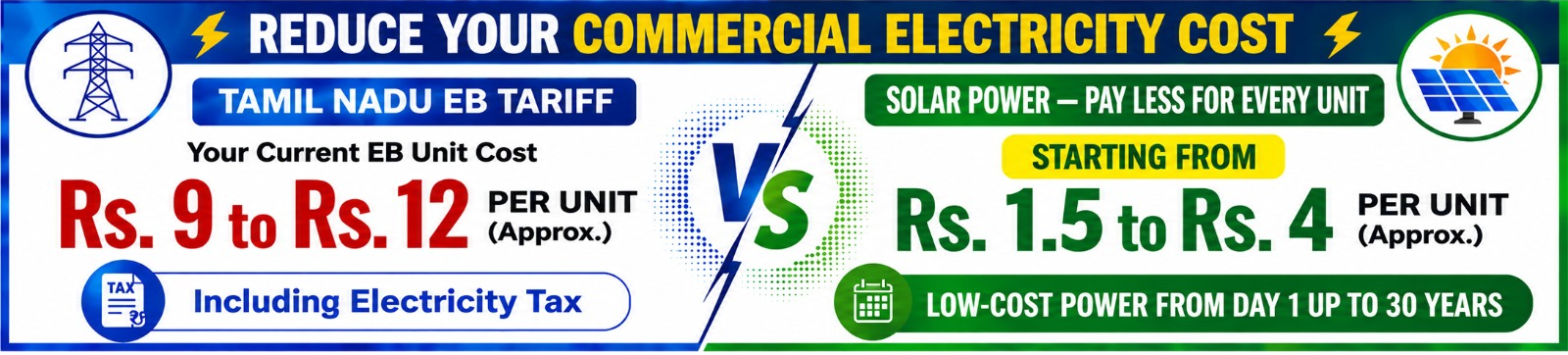
For Commercial and Industrial (C&I) PPAs — where the buyer is a factory, a data centre, or a commercial complex rather than a utility — tariffs are negotiated bilaterally. These are typically higher than DISCOM tariffs (often in the ₹3.00–₹4.50/kWh range depending on state, project size, and open access charges), but they are still substantially lower than the applicable grid tariff the industrial consumer would otherwise pay.
Tariff structures in Indian IPP PPAs:
- Fixed tariff: The tariff is locked at, say, ₹3.80/kWh for the entire 20-year term. Predictable for both parties; the IPP takes the inflation risk on costs.
- Escalating tariff: The tariff starts lower (say ₹3.40/kWh) and escalates annually by a fixed percentage (typically 1–5% per year). Reduces initial burden on the buyer while giving the IPP some protection against cost inflation.
- Levelised tariff: A single flat tariff calculated such that the net present value of all payments over 20 years equals the project’s required revenue. Common in SECI/NTPC tenders.
The PPA tariff is the foundation of the IPP’s financial model. Every other element — the debt repayment schedule, the equity return, the O&M contract — is built around what the PPA guarantees.
For a deep dive into how PPAs are structured clause by clause, see our guide to Power Purchase Agreements for Indian Industries.
Revenue Stream #2: Merchant Power Sales on the Energy Exchange
Not all IPP electricity is sold through long-term PPAs. A portion — especially for larger IPPs with significant installed capacity — is sold on the open electricity market through exchanges such as the Indian Energy Exchange (IEX).
The IEX operates India’s power exchange platform, where generators and buyers transact electricity in several market segments:
- Day-Ahead Market (DAM): Electricity bought and sold one day in advance. Prices fluctuate based on demand-supply balance on the grid.
- Real-Time Market (RTM): Near-real-time trading for imbalances.
- Green Day Ahead Market (GDAM): Dedicated to renewable energy, allowing green power to trade separately and command a premium.
- Green Term Ahead Market (GTAM): Contracts from one week to one month for green energy.
Merchant power gives IPPs flexibility to sell surplus capacity at potentially higher rates than their PPA tariff — particularly during high-demand periods. However, merchant prices are volatile and can fall sharply during oversupply conditions or grid curtailment periods. This is why most IPP revenue models are structured with a base of long-term PPA revenue and a smaller allocation to merchant sales, balancing predictability with upside potential.
For project finance lenders — who fund most IPP projects — merchant revenue is heavily discounted in bankability assessments. Lenders want to see enough contracted PPA revenue to service the debt; merchant sales are considered bonus cash flow, not security.
Explore Customized Renewable Energy Procurement Models
Get state-wise group captive regulatory guidance and customized proposals from NST Solar & Wind Energy experts.
Revenue Stream #3: Renewable Energy Certificates (RECs)
India’s regulatory framework mandates that certain categories of electricity consumers — DISCOMs, open access consumers, and captive power users — must source a minimum percentage of their electricity from renewable sources. This obligation is called the Renewable Purchase Obligation (RPO).
When an obligated entity cannot directly source the required renewable electricity, it purchases Renewable Energy Certificates (RECs) to demonstrate compliance.
Each REC represents 1 MWh (1,000 kWh) of electricity generated from a renewable source. IPPs whose electricity is not already sold under an RPO-compliant PPA can register with the Central Electricity Regulatory Commission (CERC) and generate RECs for their output. These RECs are then sold on the IEX or PXIL (Power Exchange India Limited) in separate REC trading sessions.
REC pricing has been volatile historically but has strengthened in recent years as RPO targets have grown more ambitious. Solar RECs and non-solar RECs are traded separately, with different floor and forbearance prices periodically revised by CERC.
For IPPs selling power at low tariffs in competitive bids, the additional REC revenue can meaningfully improve project returns. For IPPs selling to industrial consumers under C&I PPAs, RECs may not be separately monetizable (since the PPA buyer gets the green attribute), but they contribute to the offtaker’s RPO compliance — which is often a key motivator for the buyer to sign the PPA in the first place.
Revenue Stream #4: Carbon Credits and ESG Premiums
As India’s corporate sector faces increasing pressure from international customers, investors, and sustainability frameworks to demonstrate emissions reductions, a fourth revenue stream is emerging for renewable IPPs: carbon credits and green premium pricing.
Voluntary Carbon Markets (VCMs): Indian renewable energy projects — especially those that are additional (i.e., would not have been built without the carbon finance) — can register under international standards such as Verra’s VCS (Verified Carbon Standard) or Gold Standard and generate carbon credits. Each credit represents one metric tonne of CO₂ equivalent avoided. These credits are sold to international corporates seeking to offset their Scope 1 or Scope 2 emissions, generating USD-denominated revenue for the IPP.
Article 6 of Paris Agreement (Internationally Transferred Mitigation Outcomes): As the framework for international carbon trading matures under the Paris Agreement, Indian IPPs are increasingly positioning their projects to generate ITMOs — a newer category of internationally tradeable carbon units that could command significant premiums as countries seek to meet their NDC targets.
Corporate Green Premiums: A growing segment of large Indian corporates — particularly those with international supply chain exposure in textiles, auto components, and IT — are willing to pay a slight premium above grid tariff for contractually guaranteed renewable electricity. This “greenium” is incorporated into the PPA tariff, giving the IPP a revenue advantage over conventional power generators.
While carbon and ESG revenue streams are relatively nascent in India compared to PPA and REC income, they are growing rapidly as sustainability reporting (BRSR in India, CSRD for EU-linked supply chains) becomes mandatory.
The IPP Cost Structure: Where the Money Goes
Understanding IPP revenues is only half the picture. The other half is the cost structure that determines whether a project is profitable.
Capital Expenditure (Capex):
The largest upfront cost for an IPP is the construction of the power plant. For a solar IPP in India in 2025–26, benchmark capex is approximately:
- Solar PV (ground-mounted): ₹3.5–₹4.5 crore per MW (depending on location, terrain, module type, and balance of system)
- Wind (onshore): ₹6.5–₹7.5 crore per MW
- Hybrid (solar + wind + BESS): ₹7.0–₹10.0 crore per MW depending on the storage configuration
In addition to the core plant capex, the IPP must account for: land acquisition or long-term lease costs, grid connection infrastructure (transmission lines, substations), project development costs (surveys, permits, approvals), and contingency provisions.
Operating Expenditure (Opex):
Once the plant is commissioned, the IPP incurs annual operating costs:
- O&M (Operations & Maintenance): Typically ₹5–₹8 lakh per MW per year for solar, escalating annually. Covers panel cleaning, inverter servicing, monitoring, security, and minor repairs.
- Land lease: Typically ₹20,000–₹1,00,000 per acre per year depending on state and land type.
- Insurance: Plant and machinery insurance, third-party liability, covers approximately 0.3–0.5% of plant value annually.
- Administrative costs: SPV management, accounting, compliance, regulatory filings.
- Transmission and wheeling charges: For IPPs selling power through open access routes, state-specific wheeling charges, banking charges, and cross-subsidy surcharge apply. In Tamil Nadu, these are governed by TANGEDCO’s open access regulations.
Financing Costs:
For most IPPs, 65–75% of project cost is funded through debt — project loans from banks (State Bank of India, Power Finance Corporation), NBFCs (IREDA, REC), or through green bonds and External Commercial Borrowings. Interest rates for IPP project loans in India currently range from 8.5–10.5% per annum depending on the lender, the project risk profile, and the currency of the loan.
The remaining 25–35% is equity, contributed by the promoter and/or private equity investors. Debt service (principal repayment + interest) typically constitutes the largest single outflow in the early years of project operations.
How IPP Profitability Is Measured: The Key Financial Metrics
Investors and developers evaluate IPP projects using several financial metrics:
Project IRR (Internal Rate of Return): The discount rate at which the net present value of all project cash flows (construction cost + operating cash flows + terminal value) equals zero. A well-structured Indian solar IPP typically targets a project IRR of 10–13%.
Equity IRR: The return on the equity portion of the investment, after servicing debt. Because IPP projects use significant leverage (debt), equity IRRs are higher than project IRRs — typically 14–18% for C&I solar IPPs in India, and 12–16% for utility-scale projects competing in SECI tenders where tariffs are bid down aggressively.
DSCR (Debt Service Coverage Ratio): The ratio of the project’s annual cash available for debt service to its actual annual debt service obligation. Lenders require a minimum DSCR of 1.2–1.3x (meaning for every ₹1 of debt service due, the project generates ₹1.20–₹1.30 of cash). A higher DSCR gives lenders more confidence; a DSCR that dips below 1.0x means the project cannot repay its loans from its own revenue — a red flag.
Levelised Cost of Energy (LCOE): The all-in cost of generating one unit of electricity over the project’s entire life, expressed in ₹/kWh. For Indian solar IPPs, the LCOE is currently in the range of ₹2.20–₹3.00/kWh, significantly below grid tariffs for most industrial consumers. This gap is the fundamental commercial case for the IPP model.
The IPP Project Lifecycle: Six Phases from Idea to Decommission
An IPP project does not spring into existence overnight. From the first idea to the last kilowatt-hour generated, a typical Indian renewable IPP passes through six distinct phases:
Phase 1: Development (12–36 months)
This is the most risk-intensive phase — and the most expensive to fail at. The developer identifies a site, conducts solar/wind resource assessment, commissions geotechnical surveys, initiates land acquisition or leasing, engages with the state transmission utility for grid connectivity, and prepares the project for bidding or bilateral negotiation.
Development costs — spent before any certainty of project completion — are a significant sunk cost that developers must absorb. In competitive bid markets, only one developer wins; all others lose their development investment. This risk explains why established IPPs with deep pockets have a natural advantage over smaller entrants.
Phase 2: Financial Close (6–12 months)
Once the project has secured a PPA (either through a bid win or bilateral negotiation), the developer structures the project financing. This involves establishing the SPV, negotiating loan documentation with lenders, finalising equity arrangements, satisfying all conditions precedent (land registration, grid approval letters, regulatory consents), and executing all project contracts — EPC contract, O&M agreement, insurance policies.
Financial close is the milestone that unlocks construction funding. It is also the point at which the project’s risk profile shifts — from development risk to construction risk.
Phase 3: Construction (12–24 months)
The EPC contractor (appointed by the IPP to build the plant) mobilises on site. Modules, inverters, mounting structures, and balance-of-system components are procured and installed. Civil works, electrical infrastructure, and grid connection are completed. The IPP monitors construction progress, manages EPC contractor performance, draws down loan tranches from lenders, and ensures milestones are met.
During construction, the IPP has no revenue. The entire cost is financed by the project loan (drawn progressively) and equity contributions. Any delay in commissioning directly reduces the project’s total revenue over its life.
Phase 4: Commissioning and Stabilisation (3–6 months)
The plant is commissioned — tested against the performance parameters specified in the PPA (typically a minimum Capacity Utilisation Factor or CUF) — and energy generation begins. The first months of generation are typically slightly lower than long-run averages as the plant’s operational team optimises performance.
The IPP formally starts drawing PPA revenue once the plant achieves commercial operation, as defined in the PPA. Lenders begin monitoring DSCR from this point.
Phase 5: Operations (20–25 years)
This is the IPP’s core business phase. The plant generates electricity, the IPP collects PPA revenue, services the project debt, covers O&M costs, and distributes surplus cash flows to equity investors. Ongoing activities include preventive and corrective maintenance, performance monitoring, module cleaning schedules, regulatory compliance, annual tariff escalation claims, and insurance renewals.
Approximately 8–12 years into the project, the loan is fully repaid (depending on the amortisation schedule). After that point, the project’s entire cash flow (minus O&M and admin costs) is free to be distributed to equity — often described as the project’s “cash cow” phase.
Phase 6: Repowering, Refinancing, or Exit
As the project approaches the end of its original PPA term, the IPP faces several options:
- Repowering: Replace ageing modules and equipment with newer technology, negotiate a new PPA, and extend the project life by another 20 years.
- Refinancing: Replace the original project loan with cheaper financing (now that construction risk is retired and the project’s track record is proven), freeing up cash for equity distributions or new project development.
- Asset sale: Sell the operating project to a strategic buyer, infrastructure fund, or InvIT (Infrastructure Investment Trust) — realising the equity value crystallised over the project’s operating life. Indian operating solar projects have attracted significant secondary market interest, with transaction multiples reflecting their stable, long-term contracted cash flows.
Types of IPPs in India’s Renewable Energy Sector
The term “IPP” encompasses a wide range of organisations operating across very different market segments:
Utility-Scale Renewable IPPs
These are the largest players — companies like Adani Green Energy, ReNew Power, Greenko Group, JSW Energy, ACME Solar, and Amp Energy — that build gigawatt-scale solar and wind farms and sell electricity primarily to DISCOMs through SECI and NTPC tenders. They operate at the very bottom of the tariff curve, competing on capex efficiency, financing cost, and land acquisition capability.
Utility-scale IPPs have access to international capital markets (green bonds, ECBs, PE funds), operate with sophisticated in-house development and O&M teams, and are increasingly building hybrid (solar + wind + BESS) and round-the-clock (RTC) projects to meet DISCOM demand for 24/7 renewable supply.
Commercial and Industrial (C&I) IPPs
C&I IPPs focus on the segment most relevant to industrial energy buyers: companies that want to avoid paying DISCOM tariffs (which are often ₹7–₹12/kWh for HT industrial consumers in states like Tamil Nadu) by sourcing renewable electricity directly from an IPP through open access.
C&I IPPs develop solar and wind projects scaled for the needs of individual industrial consumers (500 kW to 50 MW typically), execute PPAs with those consumers, and arrange open access transmission of power from the generation site to the consumer’s premises.
In Tamil Nadu, Tamil Nadu’s HT industrial tariff — one of the highest in India — makes C&I IPP projects financially compelling for energy-intensive industries. The effective savings for a manufacturing unit switching from TANGEDCO HT supply to a C&I solar solar PPAange from ₹2–₹5/kWh, amounting to crores of rupees annually.
Group Captive IPPs
Under India’s Electricity Act 2003, an industrial consumer can hold a minimum 26% equity stake in a power generation company and purchase electricity from that company on preferential terms (significantly lower open access charges and surcharges). This is the Group Captive model.
Group captive IPPs aggregate multiple industrial consumers who together hold the required equity stake, enabling them to share the capacity of a common renewable generation asset and collectively enjoy the regulatory benefits. This model is particularly popular in states with high cross-subsidy surcharges (which would otherwise erode the savings from open access C&I PPAs).
For a detailed comparison of Group Captive, RESCO, and Virtual PPA models, see our article on [which renewable procurement model is right for Indian industries](#).
Rooftop and RESCO IPPs
At the smaller end of the scale, RESCO (Renewable Energy Service Company) developers operate an IPP-like model for rooftop and small ground-mounted solar installations. The RESCO owns the system installed on a consumer’s rooftop, maintains it, and charges the consumer a per-unit tariff lower than the DISCOM rate — typically under a 10–25 year PPA.
NST Solar & Wind Energy operates as a RESCO-model IPP across Tamil Nadu and South India, developing, owning, and operating solar plants (rooftop and ground-mounted) on behalf of industrial and commercial clients under long-term PPAs and BOOT (Build-Own-Operate-Transfer) structures.
Learn more about [how RESCO solar PPAs work for Tamil Nadu industries](#).
The Regulatory Framework Governing IPPs in India
IPPs do not operate in a vacuum. They function within a comprehensive regulatory framework that governs everything from project development to tariff setting to grid connectivity.
Electricity Act 2003: The foundational legislation that liberalised India’s power sector, enabling private sector IPP participation in generation (and later in distribution). The Act established open access as a right for large consumers, set up the CERC and SERCs, and created the framework for competitive bidding for power procurement.
Ministry of Power (MoP) and MNRE: The central government ministries that set policy for conventional and renewable energy respectively. MNRE’s competitive bidding guidelines under Section 63 of the Electricity Act govern how SECI/NTPC tenders are conducted and how tariffs discovered through this process receive automatic CERC/SERC approval.
CERC (Central Electricity Regulatory Commission) and SERCs: The regulatory bodies that set tariff frameworks, approve PPAs (in some cases), issue grid connectivity regulations, define REC mechanisms, and adjudicate disputes. Tamil Nadu’s SERC (TNERC) governs TANGEDCO’s procurement and sets the state’s open access regulations, including wheeling charges, banking provisions, and cross-subsidy surcharge — all of which directly affect C&I IPP economics.
Must-Run Status for Renewables: CERC regulations grant solar and wind plants “must-run” status, meaning grid operators cannot curtail their output based on economic merit order (the ranking of plants by variable cost). Grid operators can only curtail renewable plants for genuine grid stability reasons. Must-run status protects IPP revenue — particularly important as India’s grid absorbs increasing proportions of variable renewable energy.
Open Access Regulations (Green Energy Open Access Rules 2022): A landmark reform that reduced the minimum threshold for open access from 1 MW to 100 kW (for renewable energy), dramatically expanding the pool of consumers eligible for C&I PPAs and group captive arrangements. This has significantly broadened the addressable market for C&I IPPs like NST.
How NST Solar & Wind Energy Operates as an IPP in Tamil Nadu
NST Solar & Wind Energy is a South India-based independent power producer and RESCO, developing solar and wind energy projects for commercial and industrial consumers across Tamil Nadu and South India.
Our model sits at the intersection of the IPP and RESCO categories. We develop, own, and operate solar plants — both on client premises (rooftop and ground-mounted captive) and at third-party sites connected through open access — and supply electricity to industrial consumers under long-term PPAs and BOOT agreements.
What this means in practice for our clients:
- Zero upfront capital expenditure: We finance and build the plant. Our clients sign a PPA and start receiving clean electricity from Day 1 without any capital investment.
- Tariff certainty: Our PPA tariffs are fixed or moderately escalating — giving finance controllers the predictability they need for long-term energy cost planning.
- Performance accountability: Because we own the plant for 20+ years, we are directly responsible for its performance. Our income depends on how much electricity the plant generates. This aligns our interests perfectly with our clients’.
- Regulatory navigation: We handle all TANGEDCO approvals, open access applications, net metering filings, and ongoing regulatory compliance. Our clients focus on their core business.
- Flexible structures: Depending on a client’s profile, capital position, and energy goals, we can structure engagements as a pure PPA (we retain ownership throughout), a BOOT (we transfer the plant to the client after an agreed period), or a group captive arrangement.
Tamil Nadu’s industrial electricity tariffs — among the highest in India for HT consumers — make our IPP model financially compelling for energy-intensive manufacturers. A typical NST client achieving a switch from ₹9–₹11/kWh TANGEDCO HT rates to a ₹4–₹5/kWh NST PPA tariff saves ₹4–₹7/kWh on every unit consumed through the PPA — translating to savings of ₹2–₹10 crore annually depending on the company’s consumption profile.
Explore our solutions page to understand the full range of IPP, RESCO, BOOT, and group captive structures we offer.
Frequently Asked Questions About the IPP Business Model
No. A GENCO (Generation Company) is a government-owned electricity generating entity — such as NTPC, NHPC, or state-level GENCOs like TANGEDCO’s generation arm. An IPP is a purely private sector electricity generator. Both GENCOs and IPPs generate and sell electricity, but GENCOs operate under government ownership and are subject to regulated returns, whereas IPPs operate on commercial principles with market-determined returns.
Yes — this is the essence of the C&I IPP model. Under India’s open access framework (established by the Electricity Act 2003 and significantly expanded by the Green Energy Open Access Rules 2022), an IPP can supply electricity directly to eligible industrial or commercial consumers by transmitting power through the state grid (for a wheeling charge) or through dedicated transmission infrastructure. The consumer pays the IPP directly under the PPA, bypassing the DISCOM for that portion of their consumption.
There is no statutory minimum. However, practical considerations — project development costs, grid connection requirements, and financing thresholds — mean that most standalone IPP projects are at least 500 kW in capacity. Utility-scale IPPs typically develop projects of 10 MW and above. At NST, we develop C&I and RESCO-scale IPP projects from 200 kW upward for individual clients, and aggregate multiple sites into larger project portfolios.
From initial site identification to commercial commissioning, a typical Indian C&I solar IPP project takes 12–24 months. Utility-scale projects may take 24–48 months due to the scale of land acquisition, grid connection infrastructure, and regulatory approvals involved. The development timeline varies significantly by state — Tamil Nadu’s relatively streamlined TANGEDCO approval processes compare favourably with states where DISCOM approval timelines are longer.
Since the IPP owns the plant and earns revenue from its output, underperformance directly reduces IPP income. IPPs are incentivised to fix performance issues rapidly. In C&I PPAs, performance obligations (minimum CUF guarantees) are contractually specified — if the IPP fails to meet these, it may be liable for liquidated damages to the offtaker. This is a key difference from the EPC model, where the contractor’s performance liability is typically limited to the warranty period.
Yes. BOOT (Build-Own-Operate-Transfer) is a variant of the IPP model where the developer retains ownership for an agreed period (say, 15 or 25 years) and then transfers ownership of the plant to the consumer at the end of the contract — often at nominal or zero cost, since the plant’s capital cost has been fully recovered through PPA revenue. NST structures several of its industrial solar projects on BOOT terms for clients who want eventual ownership of their solar assets.
Grid curtailment — when the grid operator instructs renewable plants to reduce output due to transmission congestion or local oversupply — can reduce IPP revenue. India’s must-run regulations for solar and wind provide significant protection, but curtailment remains a risk, particularly in states with fast-growing renewable capacity but slower-growing transmission infrastructure. C&I IPPs selling under open access arrangements may also face scheduling restrictions during peak demand periods, depending on state-specific open access regulations.
The terms are often used interchangeably for the C&I rooftop solar segment, and in practical terms, they describe the same model — a developer who owns and operates a solar plant and sells electricity to a consumer under a PPA. Technically, “RESCO” (Renewable Energy Service Company) is a more specific term used in India’s MNRE and SERC documentation for rooftop and small-scale solar developers, while “IPP” is the broader, internationally recognised term. NST operates as both — an IPP at the project development level and a RESCO in the rooftop and small-scale ground-mount segment.
IPPs and their lenders assess offtaker creditworthiness carefully, since PPA revenue is the only source of debt repayment. For C&I PPAs, lenders typically want to see the offtaker’s audited financials, bank references, and a track record of electricity bill payment. Large, established manufacturing companies with consistent profitability are the easiest clients to finance against. For smaller companies or those with volatile revenues, IPPs may require security deposits, bank guarantees, or corporate guarantees to cover 3–6 months of PPA revenue.
Project IRR is the return on the total project investment (debt + equity combined), calculated before considering how the project is financed. Equity IRR is the return specifically on the equity portion of the investment — after servicing the project debt. Because IPPs use significant leverage (typically 65–75% debt), the equity IRR is substantially higher than the project IRR. For example, a solar IPP project with a 12% project IRR might deliver a 16–18% equity IRR to the equity investors, because the leveraged equity is essentially earning a return on a much smaller base while the larger debt portion is serviced at a fixed interest rate.
Conclusion: The IPP Model Reshaping India’s Energy Sector — and Your Energy Bill
India’s shift to renewable energy is not happening because factories are installing solar panels on their rooftops (though that helps). It is happening because IPPs are deploying hundreds of gigawatts of generating capacity, backed by private capital, structured through long-term PPAs, and sustained by a business model that has been refined over decades in global energy markets.
For industrial energy buyers — plant managers, CFOs, and energy officers — understanding the IPP model is not academic. It is directly relevant to every energy procurement decision you make. When an energy company proposes to install solar on your site, the single most important question is: will they own it, or will you? If they own it and sell you the electricity, you are dealing with an IPP. If they build it and hand it over, you are dealing with an EPC contractor. The contracts, the risks, and the financial implications are entirely different.
NST Solar & Wind Energy operates as an IPP and RESCO across Tamil Nadu and South India, developing and owning solar and wind assets that deliver clean, affordable electricity to industrial clients under transparent, long-term PPAs and BOOT structures.
Get Your Free Energy Consultation →
If you want to understand what an IPP-based energy solution could mean for your specific facility — your consumption profile, your TANGEDCO tariff category, your rooftop or land availability — our team is ready to provide a free, no-obligation energy procurement assessment.