
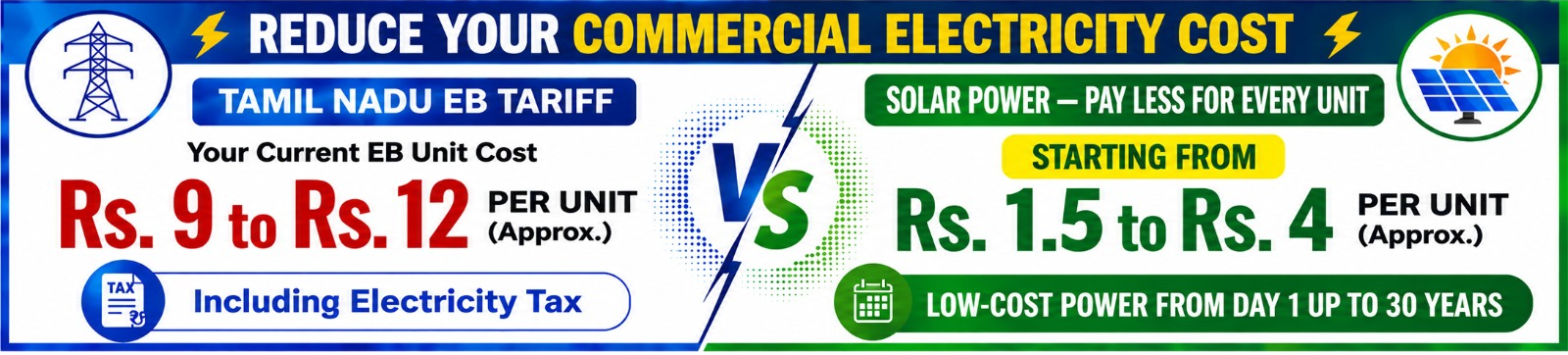
Quick Answer — What Is the RESCO Model?
The RESCO model is a zero upfront investment solar arrangement where a third-party solar developer installs, owns, operates, and maintains a rooftop solar plant while the business purchases electricity through a long-term Power Purchase Agreement (PPA).
Why Does the RESCO Model Matter?
The RESCO model helps Indian commercial and industrial businesses reduce electricity costs by 30–60% without making large capital investments in solar infrastructure.
Who Should Use RESCO Solar?
RESCO solar is ideal for:
- Manufacturing plants
- Textile factories
- Warehouses
- Commercial buildings
- Hospitals
- Educational institutions
- Businesses prioritizing ESG goals and cash flow preservation
⚡ Key Benefits of RESCO Solar
| Benefit | Impact |
|---|---|
| Zero upfront investment | Preserves working capital |
| Lower electricity tariffs | Reduces operating costs |
| No maintenance responsibility | Eliminates technical burden |
| Long-term tariff predictability | Protects against tariff escalation |
| ESG compliance support | Improves sustainability performance |
| Faster solar adoption | Simplifies implementation |
📖 Introduction
Electricity costs continue to rise for commercial and industrial businesses across India. Manufacturing units, textile factories, warehouses, and large commercial facilities are increasingly searching for ways to reduce operational expenses without affecting production efficiency.
The “resco model solar” approach has emerged as one of the fastest-growing industrial solar adoption models because businesses can install rooftop solar systems with zero upfront investment.
Under a RESCO arrangement, a solar developer finances, installs, owns, and maintains the solar power system while the business pays only for the electricity generated through a Power Purchase Agreement (PPA).
This guide explains how RESCO solar works in India, how industries save 30–60% on electricity costs, how solar PPAs are structured, and how businesses in Tamil Nadu and Chennai can evaluate whether the RESCO model is the right fit for their facilities.
📋 Executive Summary: What Businesses Need to Know About RESCO Solar
What the RESCO Model Means
The RESCO model refers to a third-party ownership structure where a Renewable Energy Service Company develops and operates a solar plant for a commercial or industrial customer.
The business does not purchase the solar plant. Instead, the business purchases electricity generated by the system at an agreed tariff.
How Businesses Save 30–60% on Electricity Bills
Commercial and industrial consumers in India often pay high electricity tariffs, especially during peak daytime operations. Rooftop solar systems under RESCO agreements allow businesses to:
- Replace expensive grid electricity
- Lock lower electricity tariffs
- Reduce dependency on DISCOM price increases
- Optimize long-term energy expenditure
According to the Ministry of New and Renewable Energy and the International Energy Agency, commercial rooftop solar adoption in India continues to grow because industrial consumers seek lower operational costs and renewable energy integration.
Why Zero Capex Solar Is Growing in India
Zero capex solar models are expanding because many businesses prefer operational expenditure optimization instead of large capital investments. Manufacturing businesses often prioritize:
- Production expansion
- Machinery upgrades
- Working capital management
- Supply chain investments
The RESCO model eliminates the need to allocate large budgets for solar infrastructure.

☀️ What Is the RESCO Model?
RESCO Definition
RESCO stands for Renewable Energy Service Company. A RESCO company finances, installs, owns, operates, and maintains a solar power plant while the customer purchases electricity generated by the plant under a long-term agreement.
How Third-Party Ownership Works
Under the RESCO structure:
- The customer provides rooftop or land space.
- The solar developer installs the solar system.
- The solar developer retains ownership.
- The customer consumes electricity generated by the plant.
- Monthly electricity billing occurs through a solar PPA.
This structure reduces technical and financial barriers for businesses adopting solar energy.
How Solar PPAs Work in India
A solar Power Purchase Agreement (PPA) is a long-term electricity purchase contract between the business and the solar developer. Typical PPA durations range between 15 years, 20 years, and 25 years. The agreement specifies:
- Electricity tariff
- Escalation clauses
- Performance guarantees
- Maintenance responsibilities
- Billing mechanisms
- Exit conditions
The Solar Energy Corporation of India has significantly accelerated awareness around solar PPAs through large-scale renewable energy adoption initiatives.
RESCO Explained Using a Simple Analogy
The RESCO model works similarly to leasing office infrastructure instead of purchasing it outright. The business gains operational benefits immediately while avoiding large capital expenditure and maintenance responsibility.
📈 Why Indian Industries Are Adopting RESCO Solar Rapidly
Rising Industrial Electricity Costs
Industrial electricity tariffs in India continue to increase due to fuel cost adjustments, grid infrastructure investments, peak demand charges, and cross-subsidy burdens. Solar PPAs help stabilize electricity pricing over long contract periods.
ESG and Sustainability Pressures
Many enterprises now include renewable energy adoption in ESG reporting frameworks. Solar adoption supports carbon reduction goals, sustainability reporting, green manufacturing initiatives, and investor expectations. The Bureau of Energy Efficiency encourages industrial energy efficiency and renewable energy integration across manufacturing sectors.
Cash Flow Preservation
The RESCO model preserves liquidity because businesses avoid major upfront solar investments. This approach benefits expanding factories, mid-sized manufacturers, working capital-sensitive businesses, and multi-location industrial operators.
Tamil Nadu’s Industrial Solar Opportunity
Tamil Nadu is one of India’s strongest industrial solar markets because of high industrial electricity consumption, strong solar irradiation, large textile manufacturing clusters, and a growing sustainability focus. Industrial hubs near Chennai, Coimbatore, Tiruppur, and Hosur are increasingly adopting rooftop solar solutions.
⚖️ RESCO vs CAPEX vs OPEX Solar Models
What Is CAPEX Solar?
CAPEX solar refers to a model where the business purchases and owns the solar system directly. The customer pays upfront installation costs, owns the asset, handles maintenance responsibility, and receives long-term financial returns.
What Is OPEX Solar?
OPEX solar refers to operational expenditure-based solar adoption models where payment occurs based on electricity usage instead of infrastructure ownership. The RESCO model is one of the most common OPEX solar structures in India.
RESCO vs CAPEX Comparison Table
| Feature | RESCO | CAPEX |
|---|---|---|
| Upfront investment | Zero | High |
| Ownership | Solar developer | Customer |
| Maintenance | Developer | Customer |
| Technical risk | Developer | Customer |
| Savings start | Immediate | Gradual |
| Asset ownership | No | Yes |
| Ideal for | Cashflow-focused businesses | Long-term investors |
Financial Risk Allocation Matrix
| Risk Type | RESCO | CAPEX |
|---|---|---|
| Performance risk | Developer | Customer |
| Maintenance risk | Developer | Customer |
| Technology risk | Developer | Customer |
| Financing burden | Developer | Customer |
| Tariff savings variability | Shared | Customer |
Which Model Is Better?
RESCO is generally better for:
- Businesses prioritizing liquidity
- Companies avoiding upfront investment
- Facilities lacking solar expertise
CAPEX may suit:
- Large enterprises with surplus capital
- Businesses seeking depreciation benefits
- Long-term infrastructure ownership strategies
📊 Soft CTA · Educational Trust-Building: Want to compare RESCO vs CAPEX economics for your facility? Request a customized energy savings analysis.
🔧 How the RESCO Solar Process Works Step by Step
Rooftop Feasibility Assessment
The solar developer evaluates:
- Rooftop size
- Structural strength
- Shadow analysis
- Energy consumption profile
Industrial rooftops with large uninterrupted spaces are ideal for solar deployment.
Energy Consumption Analysis
Energy consumption data determines:
- System sizing
- PPA economics
- Savings potential
- Solar generation optimization
Businesses with high daytime electricity usage benefit most from rooftop solar.
PPA Structuring and Agreement
The PPA defines:
- Electricity tariff
- Escalation clauses
- Contract duration
- Billing terms
- SLA commitments
Transparent agreements reduce long-term disputes.
Engineering and Regulatory Approvals
The engineering process includes:
- Electrical design
- Structural engineering
- Safety compliance
- Net metering approvals
DISCOM approvals vary across states.
Solar Plant Installation
Installation activities include:
- Module mounting
- Inverter setup
- Cabling
- Electrical integration
- Safety inspections
Industrial rooftop projects typically require 45–120 days depending on scale.
Net Metering and Grid Synchronization
Net metering allows businesses to:
- Export excess electricity
- Offset consumption
- Improve energy utilization efficiency
State policies influence net metering structures.
Real-Time Monitoring and Maintenance
Modern RESCO projects include:
- Remote monitoring
- Performance tracking
- Preventive maintenance
- Fault diagnostics
Continuous monitoring improves generation efficiency.
Monthly Billing and Reporting
Monthly billing usually depends on:
- Electricity generated
- Agreed tariff
- Meter readings
- Escalation clauses
Businesses receive detailed performance reports.
💰 Understanding RESCO Solar Tariff Structures
Fixed Tariff Model
A fixed tariff agreement maintains the same electricity price throughout the PPA duration. This model improves cost predictability.
Escalating Tariff Structure
Some PPAs include annual tariff increases. Common escalation ranges: 1%, 2%, or 3%. Businesses should evaluate escalation impact carefully.
Hybrid Pricing Structures
Hybrid PPAs combine lower initial tariffs, gradual escalations, and performance-linked pricing. These structures balance affordability and long-term economics.
Tamil Nadu and TANGEDCO Considerations
Businesses in Tamil Nadu must evaluate net metering rules, banking regulations, demand charges, and grid synchronization timelines. The Tamil Nadu Generation and Distribution Corporation plays a central role in industrial rooftop solar approvals.
Sample Tariff Example
| Parameter | Example |
|---|---|
| Existing grid tariff | ₹10/unit |
| RESCO solar tariff | ₹6.5/unit |
| Monthly usage | 100,000 units |
| Monthly savings | ₹3.5 lakh |
Hidden Clauses Businesses Must Check
Businesses should review:
- Tariff escalation formulas
- Exit penalties
- Minimum consumption obligations
- Downtime compensation clauses
- SLA response commitments
🏭 Who Should Choose the RESCO Solar Model?
Manufacturing Plants
Factories with heavy daytime energy usage achieve significant savings from solar energy integration.
Textile Industries in Tamil Nadu
Textile facilities in Tiruppur, Erode, and Coimbatore face high electricity costs because of continuous operational demand. RESCO solar improves cost competitiveness.
Warehouses and Logistics Facilities
Large warehouse rooftops provide ideal solar deployment opportunities. Logistics businesses also benefit from predictable electricity costs.
Hospitals and Educational Institutions
Hospitals and campuses consume large amounts of daytime electricity, making rooftop solar financially attractive.
ESG-Focused Enterprises
RESCO solar supports ESG reporting, sustainability commitments, renewable energy targets, and carbon reduction programs.
Checklist: Is RESCO Right for Your Business?
| Question | Yes / No |
|---|---|
| Does the facility have a large rooftop? | ☐ |
| Is daytime electricity usage high? | ☐ |
| Does the business prefer zero upfront investment? | ☐ |
| Are electricity costs increasing significantly? | ☐ |
| Is ESG reporting important? | ☐ |
If most answers are “Yes,” the RESCO model may be a strong fit.
⚠️ Critical Risks and Red Flags in RESCO PPAs
Performance Guarantees
The agreement should define minimum generation expectations, compensation mechanisms, and monitoring responsibilities.
Tariff Escalation Risks
Uncontrolled escalation clauses can reduce long-term savings. Businesses should negotiate escalation caps.
Exit Penalty Clauses
Some PPAs impose significant penalties for early termination. Exit terms should remain commercially reasonable.
Asset Transfer Terms
Businesses should understand end-of-contract ownership, buyout conditions, and asset transfer pricing.
Maintenance SLA Expectations
Service Level Agreements should specify downtime response timelines, maintenance frequency, and fault resolution standards.
Force Majeure Conditions
Force majeure clauses should clearly define natural disasters, grid failures, regulatory disruptions, and compensation obligations.
How NST Solar & Wind Energy Reduces Customer Risk
NST Solar & Wind Energy positions itself as a customer-focused industrial solar partner by emphasizing transparent PPA structures, industrial rooftop expertise, end-to-end EPC support, performance-focused operations, and local Tamil Nadu support capabilities.
Case Study: 500kW RESCO Installation for a Tamil Nadu Textile Factory
Real-world results from an industrial RESCO deployment
Client Challenge
A textile manufacturing unit faced rising electricity tariffs, high daytime energy demand, and cash flow limitations for infrastructure investment.
Project Overview
| Parameter | Value |
|---|---|
| System size | 500kW |
| Model | RESCO |
| Upfront investment | ₹0 |
| Installation timeline | 90 days |
| Contract tenure | 20 years |
Results Achieved
| Outcome | Impact |
|---|---|
| Electricity bill reduction | 35–45% |
| Annual savings | Significant operational savings |
| Carbon reduction | Major CO₂ offset |
| Maintenance burden | Eliminated for customer |
Operational Improvements
The facility achieved:
- Improved energy cost predictability
- Reduced dependence on DISCOM power
- Stronger ESG positioning
- Better operational budgeting

🏢 Why Businesses Choose NST Solar & Wind Energy for RESCO Projects
End-to-End EPC & O&M Support
- Engineering
- Procurement
- Construction
- Monitoring
- Long-term maintenance support
Chennai-Based Local Expertise
Local support teams near Chennai help accelerate site inspections, approvals, service response, and operational support.
Industrial Solar Project Expertise
Industrial solar projects require structural expertise, electrical integration experience, load optimization, and safety compliance. NST Solar & Wind Energy focuses heavily on industrial solar implementation.
Customized PPA Structures
Flexible PPA structuring helps businesses optimize tariff models, escalation structures, contract durations, and consumption economics.
Frequently Asked Questions About RESCO Solar in India
The RESCO solar model is a third-party ownership arrangement where a solar developer installs and maintains a solar plant while the customer purchases electricity generated through a Power Purchase Agreement.
A solar PPA is a long-term agreement where a business purchases solar electricity at a pre-agreed tariff from a solar developer instead of investing in the solar plant directly.
RESCO is often better for businesses seeking zero upfront investment and reduced operational responsibility, while CAPEX may suit businesses wanting long-term asset ownership.
The solar developer owns the plant throughout the contract period unless ownership transfer terms are specified in the agreement.
After the PPA ends, options may include contract renewal, asset transfer, system removal, or renegotiated tariffs.
Yes. Many Indian industries reduce electricity costs by 30–60% depending on tariff structures, consumption patterns, and rooftop utilization.
Some PPAs may include escalation clauses, minimum usage commitments, or exit penalties. Businesses should review agreements carefully before signing.
Yes. Tamil Nadu is one of India’s strongest industrial rooftop solar markets because of high industrial electricity consumption and strong solar potential.
Most industrial rooftop solar RESCO projects require 2–4 months depending on approvals, system size, and rooftop conditions.
The required rooftop area depends on energy demand and system size. Larger uninterrupted rooftops improve project feasibility.
Yes. RESCO solar reduces carbon emissions and supports renewable energy adoption targets for ESG and sustainability reporting.
Key Takeaways
- The RESCO model enables businesses to adopt solar with zero upfront investment.
- Industrial and commercial facilities can reduce electricity costs by 30–60%.
- Solar developers handle installation, ownership, maintenance, and operations.
- Long-term PPAs provide tariff predictability.
- Tamil Nadu is a strong market for industrial rooftop solar adoption.
- Businesses should carefully review PPA clauses before signing agreements.
- RESCO solar supports ESG and sustainability goals.
- Manufacturing plants, warehouses, and textile industries are ideal candidates.
Discover:
Your projected electricity savings
Ideal rooftop solar capacity
Recommended PPA structure
Estimated tariff reduction potential