
Introduction: The Private Sector Engine Powering India’s Clean Energy Revolution
India’s 500 GW renewable energy target by 2030 is one of the most ambitious energy commitments made by any country in history. As of March 31, 2026, India has already installed 274.68 GW of renewable energy capacity — achieving a record 55.29 GW of new non-fossil fuel capacity addition in FY 2025–26 alone, the highest single-year addition in the country’s history.
The government did not build most of that. Government engineers did not scout the land, negotiate the PPAs, arrange the project finance, or manage the EPC contractors. Private sector Independent Power Producers did.
IPPs are the engine of India’s renewable energy expansion — and they are operating in one of the most dynamic, well-funded, and policy-supported clean energy markets on the planet. India now ranks third globally in renewable energy installed capacity according to IRENA’s 2026 statistics, behind only China and the United States. In July 2025, renewables met 51.5% of India’s total electricity demand for the first time — a landmark that would have seemed implausible a decade ago.
For energy buyers, developers, investors, and industrial companies evaluating renewable energy participation, understanding the IPP landscape in India is not optional background knowledge. It is the essential context for every procurement decision, every investment thesis, and every development strategy in the sector.
This guide covers the full picture: India’s renewable market size and trajectory, the three procurement routes IPPs use, the major players shaping the market, the regulatory framework they operate within, the challenges they face, and a practical step-by-step guide to becoming an IPP in India.
What you will learn in this guide:
- India’s renewable IPP market size, growth trajectory, and investment flows
- The three procurement routes: SECI tenders, bilateral C&I PPAs, and group captive
- How SECI and NTPC tenders work — the bid process, qualification, and reverse auction
- State-level procurement: Tamil Nadu, Rajasthan, Gujarat, and Andhra Pradesh
- The bilateral C&I PPA market and why it is India’s fastest-growing segment
- Major IPP players operating in India today — what sets them apart
- The regulatory framework governing renewable IPPs
- Challenges: land, grid, DISCOM risk, curtailment, and recent solutions
- Tamil Nadu as an IPP destination: why it matters and what NST does there
- A step-by-step guide: how to become an IPP in India
India’s Renewable IPP Market in 2026: Size, Scale, and Trajectory
The numbers tell a story of unprecedented acceleration.
India crossed the 150 GW milestone for cumulative installed solar capacity as of March 31, 2026 — comprising 110.43 GW of utility-scale projects, 25.73 GW of rooftop solar, and 14.10 GW of KUSUM and off-grid projects. Solar energy now accounts for around 55% of India’s total renewable energy capacity, with total installed renewable energy capacity reaching 275 GW as of March 31, 2026.
The pace of growth has been extraordinary. India installed approximately 44.6 GW of solar and 6 GW of wind capacity in FY 2026 — solar installations increasing by 87.2% and wind by 45.6% compared to the previous year. India’s wind energy capacity addition of 6.05 GW in FY 2026 was the highest ever in a single year, surpassing the previous record set in FY 2016–17 by a significant margin.
In July 2025, India reached its highest-ever renewable energy share in electricity generation — renewables met 51.5% of the country’s total electricity demand of 203 GW, a historic milestone for the sector.
The vast majority of this capacity has been developed by private sector IPPs. Government-owned generators (NTPC, NHPC, SJVN, and state GENCOs) contribute a meaningful share of India’s renewable capacity, but the private IPP sector — from utility-scale giants like Adani Green and ReNew to C&I-focused developers and RESCO operators like NST — is responsible for the bulk of new capacity addition, particularly in the solar and wind segments.
Investment flows: India has attracted enormous international capital into its renewable IPP sector. Foreign direct investment into Indian renewable energy has been among the highest-volume FDI categories in recent years, with sovereign wealth funds, international infrastructure PE funds, multilateral development banks, and global energy companies investing tens of thousands of crores into IPP equity and debt across the country.
The road to 500 GW: With 274.68 GW of renewable capacity already installed as of March 2026, India has covered more than half the distance to its 500 GW target. The remaining ~225 GW must be added in roughly four years — requiring annual additions of approximately 55–60 GW per year through 2030. Given that India added 55.29 GW in FY 2026 alone, this pace is achievable — but only if the IPP ecosystem continues to function at scale, with adequate land availability, grid connectivity, and project financing.

The Three Procurement Routes for IPPs in India
IPPs in India access the market through three distinct procurement routes, each with different counterparties, contract structures, regulatory requirements, and financial profiles.
Route 1: Competitive Tariff-Based Bidding Through SECI
For utility-scale IPPs — those developing projects of 50 MW and above — the primary procurement route is competitive bidding through government-designated agencies. Historically, four agencies floated renewable energy tenders as intermediary procurers: SECI, NTPC, NHPC, and SJVN.
In a directive issued on April 6, 2026, MNRE introduced a major policy change — announcing that SECI (Solar Energy Corporation of India) would now be the only Renewable Energy Implementing Agency (REIA) allowed to issue new bids as an intermediary procurer. The change came after a high-level review meeting chaired by the Union Minister for New and Renewable Energy in March 2026, where the key finding was that a significant backlog of unsigned Power Sale Agreements and PPAs had built up across all four agencies — projects had received Letters of Award but had not moved to the agreement stage, tying up capacity and creating uncertainty for developers.
This consolidation under SECI is a significant development: it creates one central point of contact for government-sector renewable tenders and is designed to accelerate the pace from tender to financial close.
How the SECI tender process works:
SECI acts as an intermediary — it purchases power from IPPs through PPAs (called Power Purchase Agreements at the generation stage) and sells it to state DISCOMs or other buying entities through Power Sale Agreements (PSAs). The IPP never directly contracts with the state DISCOM; SECI sits in the middle, eliminating the credit risk of dealing directly with financially stressed state utilities.
The bid process follows these broad steps:
Step 1 — Request for Selection (RfS) issuance: SECI issues a detailed RfS document specifying the capacity to be procured (in MW), the project category (pure solar, pure wind, hybrid, round-the-clock, FDRE), the location (ISTS-connected or specific state), the tenor of the PPA (typically 25 years), technical specifications, and financial qualification criteria.
Step 2 — Qualification criteria: Bidders must demonstrate technical eligibility (experience in commissioning comparable renewable projects) and financial eligibility (minimum net worth thresholds, which are calculated per MW of quoted capacity). For a recent SECI tender, the technical qualification required prior experience of commissioning power projects in the last seven years — met by completing one project of at least a specified minimum capacity, or two projects of at least half that capacity, or three projects of at least two-fifths that capacity. Financial eligibility required a minimum net worth based on the capacity quoted.
Step 3 — Earnest Money Deposit (EMD): Qualified bidders submit an EMD (typically in the range of ₹9–14 lakh per MW for solar, higher for wind and hybrid) along with their technical bid. This is a refundable security deposit that ensures serious participation.
Step 4 — Reverse auction: Technically qualified bidders participate in a reverse auction — they submit progressively lower tariff bids until the auction closes. The lowest bidder(s) who can together supply the tendered capacity win the auction and are issued a Letter of Intent (LoI), later converted into a Letter of Award (LoA) after further due diligence.
Step 5 — PPA execution: The winning developer and SECI execute the Power Purchase Agreement. The developer must achieve financial close and construction commencement within defined timelines (typically 12–18 months from PPA signing) or face penalty provisions.
Step 6 — Commissioning: The project is constructed, tested, and commissioned. Upon achieving Commercial Operation Date (COD), the PPA becomes operative and revenue flows begin.
Recent tender innovations: SECI’s tender pipeline is evolving beyond simple solar and wind projects. In April 2026, SECI floated a tender for ISTS-connected renewable energy projects to supply assured peak power of 1,500 MWh (500 MW × 3 hours) under a Contract for Difference mechanism — with successful bidders entering into CfD agreements with SECI for 12 years, selling power through Indian power exchanges during non-solar hours. This reflects the sector’s shift toward round-the-clock, dispatchable renewable energy rather than simple variable generation — a direction that favours larger, more sophisticated IPPs capable of integrating storage with generation.
Route 2: State DISCOM Tenders
In parallel with central agency tenders, state electricity distribution companies procure renewable power directly through their own tendering processes. This route is particularly important for C&I-state-focused IPPs, and for projects that want DISCOM-backed long-term PPAs without the SECI intermediary structure.
Tamil Nadu — TANGEDCO: Tamil Nadu Generation and Distribution Corporation has been one of India’s most active state-level renewable energy procurers. TANGEDCO regularly issues tenders for solar and wind projects under various schemes. In late 2025, TANGEDCO invited bids for 420 MW of solar power under its Renewable Energy Solar-based Power Plant (REPP) scheme, targeting small-scale solar projects of 1 MW to 2 MW capacity — with 25-year PPAs for successful developers. This demonstrates the state’s continued appetite for new renewable procurement across the scale spectrum.
Other active state procurers: Rajasthan (RUVNL), Gujarat (GUVNL), Andhra Pradesh (APEPDCL/APSPDCL), Karnataka (BESCOM), Maharashtra (MSEDCL), and Madhya Pradesh (MPPMCL) are among the most active state-level renewable energy procurers. Each state has its own tendering process, qualification criteria, and tariff discovery mechanism — and each creates a distinct opportunity for IPPs focused on those markets.
Route 3: Bilateral C&I PPAs Through Open Access
The fastest-growing procurement route for IPPs in India is not through government agencies at all — it is the bilateral Commercial and Industrial (C&I) PPA market, where renewable energy developers contract directly with industrial and commercial consumers under open access arrangements.
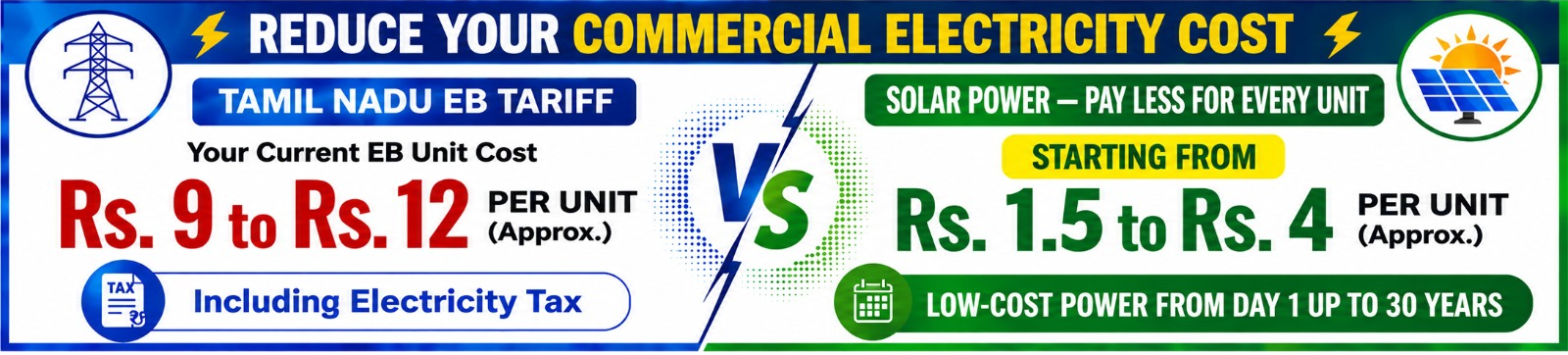
The electricity tariffs applicable to Tamil Nadu’s commercial and industrial consumers are among the highest in the country — and Tamil Nadu’s regulatory commission raised these tariffs by more than 5% in FY 2025, continuing to support significant savings for industrial consumers under the third-party open access model despite increases in wheeling charges and cross-subsidy surcharge.
Almost 80% of the solar and wind installed in Tamil Nadu is through open access — meaning consumers and generators are directly buying and selling without DISCOM intermediation, and at least 95% of that open access power is green energy. This extraordinary statistic positions Tamil Nadu as the most open-access-mature state in India, and makes it one of the most attractive markets for C&I-focused IPPs.
More than 45 GW of solar open access projects were under development or in pre-construction phases as of end-2025, driven by rising grid tariffs (now ₹6–8/kWh for industrial consumers in key states), mandatory Renewable Purchase Obligation compliance deadlines, and strong C&I demand for decarbonisation.
The bilateral C&I PPA route differs from the SECI tender route in several fundamental ways:
Counterparty: Instead of a government agency (SECI) or DISCOM, the IPP contracts directly with an industrial company — a textile mill, a pharmaceutical company, an automobile manufacturer, a data centre. The IPP must assess and bear the credit risk of this private counterparty.
Tariff: Not determined through a competitive reverse auction, but negotiated bilaterally between the IPP and the consumer. C&I PPA tariffs in Tamil Nadu currently range from approximately ₹3.50–₹5.00/kWh for solar and ₹4.00–₹5.50/kWh for wind, depending on the project location, open access charge profile, and the consumer’s specific requirements.
Scale: C&I projects range from 200 kW (a small rooftop RESCO) to 100 MW (a large industrial park or group captive arrangement). The median C&I IPP project is 1–10 MW.
Speed: Bilateral PPAs can be negotiated and closed in 2–4 months for straightforward projects, compared to 12–24 months for SECI tender processes from bid to financial close.
Group captive structure: A subset of the C&I bilateral route, group captive arrangements allow multiple industrial consumers to collectively hold at least 26% equity in a generating company and purchase power on preferential regulatory terms — avoiding or reducing the cross-subsidy surcharge that is the largest cost adder in open access PPAs. Group captive is particularly attractive in Tamil Nadu, where the cross-subsidy surcharge for open access consumers has historically been significant.
Major IPP Players in India’s Renewable Energy Market 2026
India’s IPP landscape spans a wide spectrum — from companies operating at a scale comparable to entire national grids to focused regional developers serving specific industrial markets.
Adani Green Energy Limited (AGEL)
Adani Green Energy Limited added over 5 GW (5,051 MW) of renewable energy capacity in FY 2025–26, taking its total operational portfolio to 19.3 GW — the highest greenfield annual capacity expansion globally by any company, excluding China. The new capacity included 3.4 GW of solar, 0.7 GW of wind, and 1 GW of wind-solar hybrid capacity.
AGEL’s flagship Khavda Renewable Energy Park in Gujarat’s Rann of Kutch is one of the largest renewable energy complexes under development anywhere in the world, spanning 726 square kilometres and targeting 30 GW of total capacity. AGEL operates almost exclusively in the utility-scale segment, with revenues primarily from long-term SECI and state DISCOM PPAs.
What differentiates AGEL: Unmatched scale, access to international capital markets (green bonds, institutional equity), and a fully integrated supply chain strategy through the broader Adani Group’s solar manufacturing capabilities.
ReNew Energy Global
NASDAQ-listed and operating across 11 Indian states, ReNew Power has a total portfolio exceeding 13 GW spanning solar, wind, and hydro — one of the few Indian clean energy companies with a truly global financial profile. ReNew operates primarily in the utility-scale segment, with a growing focus on hybrid and round-the-clock renewable projects that require storage integration.
ReNew has been at the forefront of India’s shift toward Firm and Dispatchable Renewable Energy (FDRE) — structuring projects that combine solar, wind, and battery storage to deliver a predetermined generation profile (rather than variable renewable output), enabling them to command higher tariffs and serve DISCOMs’ need for reliable supply.
What differentiates ReNew: International listing, sophisticated financial structure, and pioneering position in FDRE and round-the-clock renewable project development.
Greenko Group
Greenko Group currently has around 7.5 GW of operational renewable capacity across wind, solar, and hydro assets spread across India’s 15 states, with 133 renewable energy projects in total including operational assets and projects under construction. Greenko operates with a net installed capacity of 11 GW across 20 states, making it one of the largest energy storage-focused IPPs in India.
Greenko’s defining strategic differentiation is its integrated renewable energy storage model — combining solar, wind, and pumped hydro storage to deliver round-the-clock renewable energy at scale. Its flagship Pinnapuram project in Andhra Pradesh integrates pumped storage with solar and wind capacity to provide dispatchable renewable energy, representing the next frontier of India’s renewable energy development.
What differentiates Greenko: Storage-integrated generation, strong backing from GIC (Singapore’s sovereign wealth fund) and ADIA (Abu Dhabi Investment Authority), and a focus on high-value dispatchable renewable contracts.
JSW Energy (JSW Neo Energy)
JSW Energy has evolved from a conventional power generator into one of India’s most ambitious renewable IPPs, targeting a 20 GW renewable portfolio by 2030. JSW Neo Energy recently secured a 25-year PPA with SECI to supply 230 MW of Firm and Dispatchable Renewable Energy at ₹4.98/kWh — its first PPA for an FDRE project — and separately signed a PPA with NTPC for a 700 MW solar power project.
What differentiates JSW Energy: Integrated industrial conglomerate backing (JSW Steel, JSW Cement, JSW Infrastructure), captive energy demand from its own manufacturing operations, and a growing focus on green hydrogen and green steel applications.
ACME Solar Holdings
ACME Solar is one of the top independent power producers dedicated to creating sustainable energy solutions in India, with 7.39 GW of renewable energy installed using solar, wind, hybrid, and FDRE project structures. ACME operates across utility-scale solar, wind, and hybrid projects, with an increasing focus on green hydrogen and green ammonia production using renewable energy.
Tata Power Renewables (TPREL)
Tata Power’s green energy arm, TPREL, delivers solar rooftop, ground-mounted, and hybrid energy systems, having built India’s largest rooftop solar plant, with over 4 GW of installed capacity. Tata Power’s unique position spans both utility-scale IPP development and the distributed/RESCO segment — making it one of the few large IPPs with significant exposure to the C&I rooftop market.
The C&I and RESCO IPP Tier
Below the utility-scale giants is a large and growing tier of C&I-focused and RESCO IPPs — companies like NST Solar & Wind Energy — that serve the commercial and industrial market through bilateral PPAs, BOOT structures, and group captive arrangements. This tier is where the majority of India’s open access solar capacity lives, and where the highest concentration of value creation is occurring for industrial energy consumers.
These developers typically operate at the 200 kW to 50 MW project scale, work directly with industrial clients, navigate state-specific open access regulations, and provide the hands-on client relationship that utility-scale IPPs — focused on government tenders — cannot deliver.
Calculate Your Industry’s Savings Potential
Request a customized industrial electricity savings analysis from our renewable energy experts.
Regulatory Framework Governing Renewable IPPs in India
Renewable IPPs in India operate within a layered regulatory framework that spans central legislation, ministry guidelines, central regulatory orders, and state-specific regulations.
Electricity Act 2003: The foundational legislation that liberalised India’s power sector and created the legal basis for private sector IPP participation in generation. The Act establishes open access as a right for eligible consumers, creates the CERC/SERC regulatory architecture, and enables competitive bidding as the primary mechanism for power procurement. All subsequent renewable energy regulation is built on the foundation of this Act.
Ministry of New & Renewable Energy (MNRE) competitive bidding guidelines: Under Section 63 of the Electricity Act, tariffs discovered through competitive bidding conducted in accordance with MNRE guidelines are deemed to have received regulatory approval — eliminating the need for case-by-case CERC/SERC tariff approval for each project. This framework is what makes SECI and state DISCOM tenders work as the primary procurement mechanism.
MNRE centralisation of bidding under SECI (April 2026): As noted above, MNRE’s April 2026 directive centralising all new renewable energy bids under SECI as the sole intermediary procurer is a significant recent regulatory development that IPPs and developers must factor into their tender strategy going forward.
Green Energy Open Access Rules 2022: A landmark central government regulation that reduced the minimum threshold for open access (for renewable energy) from 1 MW to 100 kW, dramatically expanding the pool of C&I consumers eligible for bilateral PPAs. This single rule change has been one of the most important demand catalysts for the C&I IPP segment.
Tamil Nadu Green Energy Open Access Regulations 2025: Tamil Nadu notified new Green Energy Open Access Regulations in 2025 that permit open access for electricity generated from solar, wind, hybrid, small hydro, biomass, and waste-to-energy projects, covering intra-state transmission and distribution systems. The regulations establish clear frameworks for wheeling charges, cross-subsidy surcharges, banking charges, and deviation settlement for renewable generators.
Importantly, Tamil Nadu’s 2025 GEOA regulations permit banking for intra-state transactions, with surplus renewable energy bankable with the distribution licensee within the same billing cycle — with charges levied in kind at 8% of banked energy. Unlike earlier provisions, the new rules disallow carry-forward of banked energy beyond a month, except for wind projects commissioned on or before March 31, 2018. This is a material change from earlier banking provisions and affects the financial modelling of open access solar IPP projects in Tamil Nadu.
Must-run status for renewable energy: CERC regulations grant solar and wind plants must-run status — grid operators cannot curtail their output based on economic merit order, only for genuine grid stability reasons. This protection is fundamental to IPP revenue predictability.
Renewable Purchase Obligations (RPO): The requirement for DISCOMs, open access consumers, and captive power users to source a minimum percentage of their electricity from renewable sources creates mandatory demand for renewable energy — supporting both the utility-scale IPP market (DISCOMs procuring to meet RPO) and the C&I IPP market (industrial consumers sourcing open access solar/wind to meet their RPO obligations).
ISTS charge waiver: The Central Government’s waiver of Inter-State Transmission System (ISTS) charges for renewable energy projects has been a critical cost support mechanism. As of April 21, 2026, the ISTS charge waiver for wind and solar projects applies to projects commissioned before June 30, 2028. The approaching expiry of this waiver is a key market timing factor — projects that achieve commissioning before June 2028 secure a permanent ISTS charge waiver for their entire operational life, significantly improving project economics relative to projects commissioned after the deadline.
Challenges Facing IPPs in India — and Recent Solutions
India’s IPP sector operates in a high-growth, high-opportunity environment — but it is not without significant challenges. Understanding these headwinds is essential for any developer, investor, or buyer evaluating the sector.
Challenge 1: Land Acquisition and Title Risk
Land for utility-scale solar and wind projects is one of the most persistent constraints on IPP project development in India. Ground-mounted solar requires approximately 4–5 acres per MW; a 100 MW project needs 400–500 acres of contiguous, encumbrance-free land. In most Indian states, achieving this requires negotiating with dozens or hundreds of individual landowners, navigating complex land revenue records, and managing the risk of title disputes, encroachments, and community opposition.
Recent solutions: Renewable Energy Zones (REZs) — designated government-identified land parcels with pre-cleared land titles, grid connectivity, and evacuation infrastructure — are being developed by central and state governments to de-risk land acquisition for large IPPs. Solar parks (aggregated land banks managed by state solar energy corporations) provide similar risk mitigation. Tamil Nadu’s dedicated wind energy zones in Tirunelveli, Thoothukudi, and Coimbatore districts are examples of state-facilitated land solutions.
Challenge 2: Grid Evacuation Bottlenecks
India’s transmission grid is expanding rapidly, but not always at the pace required by renewable energy capacity addition. Projects that are ready to commission can be delayed for months — or sometimes years — waiting for grid connectivity and evacuation infrastructure to be completed. This delay has two damaging effects: it increases the project’s financing cost (interest accrual during construction without revenue) and it reduces the project’s overall revenue over its life.
Recent solutions: The government’s focus on Renewable Energy Corridors (RECs) — dedicated high-capacity transmission infrastructure connecting renewable-rich regions to demand centres — and the expansion of PGCIL’s green energy corridors are addressing the bottleneck at scale. For C&I IPPs in Tamil Nadu, TANGEDCO’s relatively well-developed transmission infrastructure in the state’s renewable energy zones (particularly Tirunelveli and Coimbatore districts) makes grid connectivity more predictable than in many other states.
Challenge 3: DISCOM Payment Risk
For utility-scale IPPs selling to state DISCOMs under long-term PPAs, the financial health of the DISCOM counterparty is a serious and ongoing concern. Many Indian state DISCOMs carry substantial accumulated losses and have histories of payment delays to generators — affecting the IPP’s ability to service project debt and distribute returns to equity investors.
Recent solutions: The late payment surcharge (LPS) rule notified by the Ministry of Power requires DISCOMs to pay a mandatory surcharge on delayed payments — effectively penalising DISCOM tardiness and improving payment discipline. The Revamped Distribution Sector Scheme (RDSS) provides central government funding for DISCOM financial turnaround. SECI’s intermediary role in central agency tenders provides an additional payment buffer — SECI’s payment to IPPs is backed by the central government’s credit standing, which is stronger than most state DISCOMs.
For C&I IPPs selling directly to industrial consumers (bypassing DISCOMs entirely), DISCOM payment risk is not an issue — though it is replaced by the credit risk of the industrial offtaker, which must be managed through security deposits, bank guarantees, and escrow arrangements.
Challenge 4: Grid Curtailment
As India’s renewable energy capacity grows rapidly, the grid must absorb increasing volumes of variable solar and wind generation. In states with high renewable penetration but slower transmission expansion (including Tamil Nadu), curtailment events — where grid operators instruct renewable plants to reduce output to prevent grid instability — have become more frequent.
Recent solutions: Battery Energy Storage Systems (BESS) are increasingly being integrated into renewable projects to smooth generation profiles and reduce curtailment risk. The CERC’s must-run regulations provide legal protection, but enforcement can be inconsistent. The development of round-the-clock and FDRE project structures (which include storage to deliver a predictable generation profile) reduces curtailment risk by making the generator’s output more compatible with grid management requirements.
Challenge 5: Regulatory Uncertainty — Open Access Charges
For C&I IPPs, the open access charge environment — wheeling charges, cross-subsidy surcharges, additional surcharges, banking charges — is subject to periodic revision by state regulatory commissions. An IPP that structures a 20-year C&I PPA based on current open access charges faces the risk that those charges increase significantly over the PPA term, eroding the consumer’s savings and potentially making the PPA economics unattractive.
Recent solutions: The Green Energy Open Access Rules 2022 provide some central government backstop — mandating concessions on CSS for green energy open access consumers and establishing a framework that limits states’ ability to make open access economics purely unattractive. Tamil Nadu’s 2025 GEOA Regulations provide greater regulatory clarity. However, regulatory risk cannot be fully eliminated; it must be allocated in C&I PPAs through change-in-law provisions that allow appropriate sharing of the risk between the IPP and the consumer.
Explore Customized Renewable Energy Procurement Models
Get state-wise group captive regulatory guidance and customized proposals from NST Solar & Wind Energy experts.
Tamil Nadu as an IPP Destination: Why It Leads India’s C&I Renewable Market
Among India’s major states, Tamil Nadu holds a unique position as the country’s most mature and active market for C&I renewable energy through open access.
Almost 80% of the solar and wind installed in Tamil Nadu is through open access — with at least 95% of that open access power being green energy. No other major Indian state comes close to this proportion of renewable energy deployment through the C&I open access route.
Several factors combine to make Tamil Nadu an exceptionally attractive IPP destination:
Renewable resource quality: Tamil Nadu has some of India’s highest solar irradiance levels (particularly in the southern districts of Tirunelveli, Thoothukudi, and Tenkasi) and is one of the country’s premier wind energy states, with consistently high wind speeds in the Palghat Gap region, Coimbatore, and the Aravalli ridge. The combination of strong solar and wind resources in the same state enables efficient hybrid IPP projects.
High industrial electricity tariffs: Tamil Nadu’s commercial and industrial electricity tariffs are among the highest in India, with TNERC raising them by more than 5% in FY 2025, continuing to create significant savings opportunities for industrial consumers under the open access model. High baseline grid tariffs mean the savings potential from open access renewable PPAs are larger in Tamil Nadu than in most other states — making the commercial proposition for C&I IPPs stronger.
Established transmission infrastructure: TANGEDCO has developed an excellent transmission system over the years to evacuate power generated from renewable plants to load centres, and has implemented first-of-its-kind automatic meter reading (AMR) at scale for open access billing and real-time monitoring of wind and solar generators. This operational maturity reduces execution risk for C&I IPPs compared to states where open access billing and settlement systems are less developed.
Industrial concentration: Tamil Nadu is India’s largest manufacturing state by output — home to major clusters of textile mills, automobile and auto-component manufacturers, pharmaceutical companies, chemical plants, cement factories, and food processing industries. This concentration of energy-intensive industry creates a deep, liquid demand base for C&I IPP projects.
Green Energy Open Access Regulations 2025: Tamil Nadu’s updated GEOA Regulations provide a clearer, more predictable framework for open access solar and wind IPPs than many other states. The regulations clearly define transmission charges, wheeling charges, cross-subsidy surcharges, and banking charges — and establish a structured approach to deviation settlement for renewable generators.
NST Solar & Wind Energy is headquartered in Tamil Nadu and operates as a C&I IPP and RESCO across the state and South India — developing, owning, and operating solar and wind plants for industrial clients under long-term PPAs and BOOT structures. Our deep familiarity with Tamil Nadu’s regulatory environment, TANGEDCO approval processes, and state-specific open access economics is a core part of what we offer to our clients.
Explore our [solutions page](#) to understand how NST structures C&I IPP projects for Tamil Nadu industries.
How to Become an IPP in India: Step-by-Step Guide
Becoming a renewable energy IPP in India — developing, owning, and operating power projects that sell electricity under long-term PPAs — is a complex, multi-year undertaking. But for those with the right combination of technical capability, financial resources, and regulatory knowledge, it is one of the most rewarding businesses in India’s current economic environment.
Here is the step-by-step pathway, from concept to commercial operation.
Step 1: Company Formation and Strategy Definition (Months 1–3)
The first step is establishing the legal and strategic foundation:
Corporate entity: Register a private limited company or LLP in India (in most cases, a private limited company is preferred for the developer entity, given its easier access to equity investment and project finance). If you are developing a single project, a separate SPV will be created for it; the developer company is the holding/promoting entity.
Strategy clarity: Define your target segment before you begin development. Utility-scale (50 MW+) requires massive capital and competing against established players with lower financing costs. C&I (200 kW – 50 MW) requires deep relationships with industrial buyers and state regulatory knowledge. RESCO (100 kW – 5 MW) requires an on-the-ground sales and project management capability. Most successful new entrants start in the C&I or RESCO segment and scale up.
Team: Assemble a team that covers the four critical capabilities: project development (site selection, regulatory approvals), technical (engineering, EPC procurement), commercial (client acquisition, PPA structuring), and finance (project finance, investor relations). Missing any of these in-house significantly increases execution risk.
Step 2: Project Identification and Development (Months 3–18)
Project development is the most risk-intensive phase of the IPP journey — and the one where most first-time developers underestimate the time, cost, and complexity involved.
Site selection: For utility-scale and C&I ground-mount projects, identify candidate sites based on solar or wind resource quality (using satellite data and on-ground assessment), land availability and title clarity, proximity to grid evacuation infrastructure (substations, transmission lines), distance from the consumer’s premises (for open access projects), and state-specific regulatory factors (applicable charges, approval timelines).
Land acquisition: Initiate land lease negotiations with landowners or engage with state solar parks / renewable energy zones for land allotment. This is almost always the longest-duration step in the development process. Secure lease agreements that cover the full project life (25+ years) with renewal options.
Resource assessment: Commission a solar or wind resource assessment — minimum 12 months of on-site measurement for wind projects, satellite data plus 3–6 months of shadow measurement for solar — to establish the project’s generation potential with bankable confidence levels.
Grid connectivity application: Apply to the state transmission utility (TANGEDCO in Tamil Nadu, TANTRANSCO for interstate) for grid connectivity and long-term access. This involves a formal application, technical feasibility study, connectivity agreement, and long-term access charge determination. Grid connectivity is on the critical path for project commissioning — start this process as early as possible.
Regulatory approvals: Obtain all applicable statutory clearances — environmental clearance (for projects above prescribed thresholds), consent to establish from the State Pollution Control Board, forest clearance (if applicable), and any state-specific approvals required for renewable energy projects.
PPA negotiation: For C&I IPPs, identify the offtaker and negotiate the PPA in parallel with development activities. The PPA must be in place (or at an advanced draft stage) before a project finance lender will consider sanctioning a loan. For SECI tender route, the PPA is the output of the bid process — not a bilateral negotiation.
Step 3: SPV Formation and Financial Close (Months 12–24)
Once the project has secured its land, PPA (or LoA from SECI), grid connectivity agreement, and major regulatory approvals, it is ready to move toward financial close.
SPV formation: Incorporate the project-specific Special Purpose Vehicle (a private limited company) and transfer all project assets and contracts into the SPV’s name.
Financial modelling: Prepare a detailed, bankable financial model covering the full project life — capital costs, operating costs, financing structure, PPA revenue, DSCR profile, equity IRR, and sensitivity analysis. This model is the primary tool for both lender appraisal and equity investor engagement.
Lender selection and engagement: Approach IREDA, PFC, PSU banks, or infrastructure NBFCs for project finance. Prepare the information memorandum (detailed project brief), term sheet negotiations, and due diligence documentation package.
Equity investor engagement (if applicable): For larger projects where promoter equity is insufficient, approach PE funds or co-investors. Negotiate equity terms, shareholder agreement, and board governance.
Financial close: Satisfy all conditions precedent specified in the loan agreement — all contracts executed, all approvals obtained, equity contribution confirmed, DSRA funded — and receive the first drawdown of the project loan. This is the milestone that enables construction to begin.
Step 4: Construction (Months 18–36)
Appoint an EPC contractor through competitive tendering, execute a fixed-price, lump-sum EPC contract, and manage construction to completion. Key milestones: financial close, EPC contract signature, construction commencement, mechanical completion, commissioning tests, and Commercial Operation Date (COD).
During construction, draw down the project loan in tranches linked to construction milestones. Maintain lender reporting obligations and ensure insurance coverage is in place from construction commencement.
Step 5: Commercial Operations (Year 2 Onward — for 20–25 Years)
Achieve COD, commence PPA revenue, service project debt, manage O&M, and maintain regulatory compliance. Build your track record — which is the most valuable asset you own as a developer for accessing project finance for your next project.
As your operating portfolio grows, you build the financial strength, the lender relationships, and the equity capital (from project returns) to develop progressively larger projects — the virtuous cycle that has enabled India’s most successful IPPs to scale from first projects to multi-gigawatt portfolios.
How NST Solar & Wind Energy Participates in This Market
NST Solar & Wind Energy operates as a C&I-focused IPP and RESCO in Tamil Nadu and South India. We develop, own, and operate solar plants (both rooftop and ground-mounted) for industrial and commercial clients under long-term PPAs and BOOT agreements — navigating the open access regulatory framework on our clients’ behalf and delivering contracted clean energy at tariffs well below TANGEDCO HT rates.
Our position in the C&I and RESCO tier of the IPP landscape means we work directly with the manufacturing companies, logistics parks, commercial buildings, and industrial clusters that collectively represent some of the most energy-intensive demand in South India. We bring the project development, financing, regulatory, and O&M capabilities of a professional IPP to clients who want the outcome — affordable, clean electricity — without the complexity of becoming an energy developer themselves.
If you are an industrial consumer in Tamil Nadu evaluating whether an IPP-based solar or wind solution is right for your facility, our team can provide a detailed, no-obligation energy assessment — including modelling your open access cost stack, estimating your savings under a PPA, and explaining the procurement structure options available to you.
Request Your Free Energy Assessment →
Or connect with us directly: +91 90876 50009
Frequently Asked Questions About IPPs in India’s Renewable Energy Market
SECI tender minimum project sizes vary by tender category and are specified in the RfS document. Historically, most SECI utility-scale tenders have specified minimum bid capacities of 50–500 MW — effectively limiting participation to large, established IPPs. However, smaller-capacity tenders (10–50 MW) do appear periodically, particularly for state-specific or distributed generation programmes. For developers at the 1–50 MW scale, bilateral C&I PPAs and state DISCOM direct tenders are the more accessible routes.
Yes. India permits 100% FDI in the renewable energy sector under the automatic route — no prior government approval is required. Foreign companies can incorporate an Indian subsidiary, acquire equity in existing Indian renewable SPVs, or hold equity in Indian renewable energy companies. Many of India’s largest IPPs have substantial foreign equity ownership. Foreign developers entering the market for the first time typically do so through a joint venture with an established Indian partner who provides regulatory knowledge and on-the-ground execution capability.
The licensing requirements for IPPs depend on the project category and scale. Under the Electricity Act 2003, generating companies do not require a generation licence for projects that qualify as captive, RESCO/third-party sale, or open access projects below certain thresholds. However, all IPPs must: register the SPV as a company in India, obtain grid connectivity approval from the relevant transmission utility, register with the state load despatch centre (SLDC) for scheduling purposes, comply with environmental and pollution control clearances, and — for projects above the applicable RPO threshold — register with the Central Electricity Authority (CEA) as a generating company.
For a C&I ground-mounted solar IPP project in Tamil Nadu, the typical timeline from initial site identification to Commercial Operation Date is 18–30 months — with land acquisition and grid connectivity approval being the longest-duration steps. Rooftop RESCO projects can be developed and commissioned in 6–12 months due to their smaller scale and simpler regulatory requirements. Utility-scale projects (50 MW+) typically require 30–48 months from concept to COD due to the scale of development, financing, and construction activities.
Renewable Energy Zones are government-designated areas with favourable renewable energy resources (solar, wind, or both), pre-identified land (either government land or facilitated private land aggregation), and pre-planned grid evacuation infrastructure. Developing a project within an REZ significantly reduces the two most time-consuming risks in IPP development: land acquisition and grid connectivity. Several Indian states have designated REZs; Tamil Nadu’s wind energy development zones in Tirunelveli and Coimbatore districts are among the most established examples.
The Inter-State Transmission System (ISTS) charge waiver exempts renewable energy projects from paying ISTS transmission charges — the fee for using PGCIL’s national high-voltage grid for inter-state power transfer. This waiver has applied to solar and wind projects commissioned within specific windows, providing a significant cost advantage for projects that can access inter-state markets. As of April 2026, the ISTS charge waiver applies to projects commissioned before June 30, 2028. Projects commissioned after this deadline will be subject to full ISTS charges, which can significantly affect project economics — particularly for IPPs selling power to buyers in a different state.
For a C&I or RESCO-scale first project (200 kW – 10 MW), Tamil Nadu is one of India’s most attractive starting markets. The combination of high industrial electricity tariffs (making the savings case strong), strong solar and wind resources, established open access infrastructure (TANGEDCO’s AMR system, clear billing processes), a growing and sophisticated pool of potential C&I offtakers, and the 2025 GEOA Regulations providing a clearer regulatory framework all make Tamil Nadu a relatively low-execution-risk environment for C&I IPP entry. The key challenge is the complexity of the open access charge stack — which requires local regulatory expertise to navigate correctly.
A GENCO (Generation Company) is a government-owned electricity generating entity — such as NTPC, NHPC, SJVN at the central level, or TANGEDCO’s generation arm (TNGENCO), TNGSL, or KPCL at the state level. GENCOs operate under government ownership, benefit from government-backed credit ratings (enabling lower-cost financing), and are subject to regulated returns. An IPP is a purely private sector electricity generator operating on commercial terms, bearing full market risk and financial risk, and earning returns determined by the market rather than by regulatory determination. Both GENCOs and IPPs participate in India’s renewable energy expansion, but IPPs account for the overwhelming majority of new capacity being added.
India introduced a Wind Renewable Consumption Obligation (Wind RCO) — a separate wind-specific RPO that requires large consumers to source a minimum percentage of their electricity from wind power specifically, not just renewables generally. This is significant because it creates a category of corporate demand that can only be satisfied by wind power — solar PPAs do not count toward Wind RCO compliance. For wind IPPs, the Wind RCO creates a guaranteed stream of demand from industrial consumers and DISCOMs that must source wind power regardless of whether they already have solar PPAs in place.
India’s National Green Hydrogen Mission targets 5 million metric tonnes of green hydrogen production annually by 2030 — all of which must be powered by renewable energy. Green hydrogen electrolysers require enormous quantities of low-cost, reliable electricity; the LCOE of renewable electricity is the primary determinant of green hydrogen’s production cost and commercial viability. This creates a new and potentially enormous demand category for renewable IPPs — supplying dedicated electricity to green hydrogen production facilities, either through captive renewable generation co-located with electrolysers, or through long-term PPAs with hydrogen producers. For large IPPs with the capital and technical capability to develop dedicated renewable assets at the gigawatt scale, the Green Hydrogen Mission represents the next frontier of India’s renewable energy market.
Conclusion: India’s IPP Sector in 2026 — Mature Enough to Trust, Dynamic Enough to Reward
India’s renewable IPP market in 2026 is a study in contrasts. It is mature enough to have established financial structures, regulatory frameworks, and a proven track record of large-scale project execution. It is dynamic enough that new procurement mechanisms (FDRE, CfD, Round-the-Clock tenders), new technologies (hybrid projects, BESS integration), and new demand categories (Green Hydrogen, Wind RCO) are creating opportunities that did not exist three years ago.
For industrial energy buyers, the lesson is clear: the IPPs operating in your market today — whether utility-scale giants or C&I-focused RESCO developers — are sophisticated, professionally run entities backed by institutional capital and operating within a well-developed regulatory framework. The question is not whether to engage an IPP, but how to choose the right one for your specific needs, and how to structure the engagement to protect your interests over a 20-year horizon.
For aspiring developers and investors, India’s renewable IPP market offers genuine, measurable equity returns — but only for those who bring the complete package: technical capability, regulatory knowledge, financial structuring expertise, and a credible track record.
NST Solar & Wind Energy brings all of these capabilities to the Tamil Nadu and South India C&I market — offering industrial clients a transparent, performance-backed path to clean, affordable energy through IPP-structured PPAs and BOOT agreements.
The best first step is a conversation about your specific energy situation. Let our team show you what an IPP model could mean for your facility and your energy costs.
Get Your Free Energy Consultation →
Or reach us: +91 90876 50009
Get Your Free Energy Consultation →
If you want to understand what an IPP-based energy solution could mean for your specific facility — your consumption profile, your TANGEDCO tariff category, your rooftop or land availability — our team is ready to provide a free, no-obligation energy procurement assessment.