

Wind energy is one of the fastest-growing renewable energy sources in the world. Wind turbines convert kinetic energy from wind into electricity that powers homes, businesses, and industries. However, the efficiency and longevity of these turbines depend heavily on proper windmill maintenance.
Regular maintenance ensures that turbines operate safely, produce maximum power output, and avoid costly breakdowns. Without proper inspection and servicing, components such as blades, gearboxes, and generators can deteriorate, resulting in reduced efficiency or complete turbine failure.
This guide explains everything about windmill maintenance, including operational procedures, maintenance strategies, turbine servicing methods, and the role of professional maintenance companies.
What is Windmill Maintenance?
Windmill maintenance refers to the routine inspection, servicing, and repair of wind turbines to ensure optimal performance and reliability.
Maintenance activities include:
- Component inspection
- Lubrication and cleaning
- Electrical system checks
- Structural inspections
- Monitoring turbine performance
Proper maintenance in windmill systems is essential because turbines operate in harsh environmental conditions such as high winds, rain, dust, and temperature fluctuations.
Regular maintenance improves turbine efficiency, extends equipment lifespan, and prevents unexpected downtime.
Importance of Windmill Maintenance
Wind turbines are large mechanical systems with multiple moving parts. Without routine maintenance, these components can experience wear and tear that affects energy production.
Key reasons why maintenance is essential include:
1. Increased Energy Efficiency
Regular inspections ensure turbines operate at maximum power output.
2. Reduced Operational Costs
Preventive maintenance reduces expensive repairs and downtime.
3. Longer Equipment Lifespan
Well-maintained turbines can operate efficiently for 20–25 years.
4. Improved Safety
Maintenance prevents mechanical failures that could damage equipment or cause accidents.
5. Better Reliability
Routine servicing ensures uninterrupted electricity generation.
Types of Windmill Maintenance
Wind turbines require different types of maintenance depending on operational conditions and equipment health.
Preventive Maintenance
Preventive maintenance involves regularly scheduled inspections and servicing to prevent equipment failures.
Activities include:
- Blade inspections
- Gearbox lubrication
- Electrical system testing
- Bolt tightening
- Sensor calibration
Preventive maintenance helps identify potential issues before they cause turbine failures.
Corrective Maintenance
Corrective maintenance occurs when a component fails or performs below expected standards.
Examples include:
- Replacing worn bearings
- Repairing damaged blades
- Fixing electrical faults
- Replacing sensors
Corrective maintenance restores turbine functionality after problems are detected.
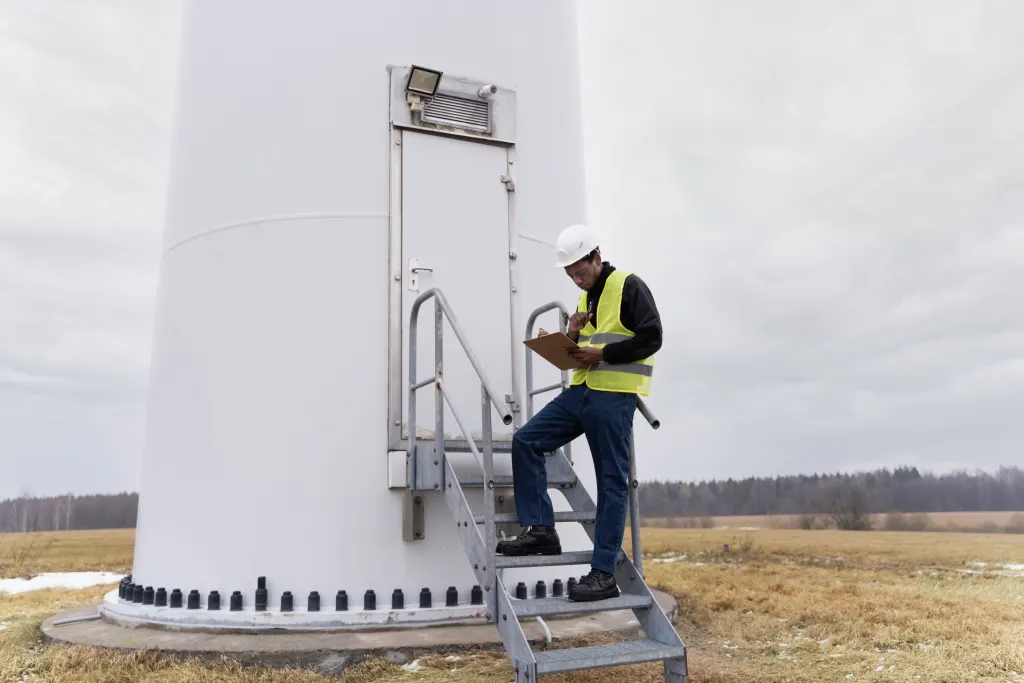
Breakdown Maintenance
Breakdown maintenance is required when a turbine stops operating due to a mechanical or electrical failure.
Operators must follow basic operating procedures for breakdown maintenance of windmill systems, which include:
- Diagnosing the cause of failure
- Isolating affected components
- Repairing or replacing damaged parts
- Testing turbine performance after repair
These procedures are commonly referred to as BOP for breakdown maintenance of windmill turbines.
Key Components Checked During Windmill Maintenance
Wind turbines contain several critical components that must be inspected regularly.
Rotor Blades
Rotor blades capture wind energy and convert it into mechanical motion. Maintenance includes:
- Checking for cracks or erosion
- Inspecting blade alignment
- Cleaning dirt and debris
Blade damage can significantly reduce turbine efficiency.
Gearbox
The gearbox converts slow rotor rotation into faster generator rotation.
Maintenance tasks include:
- Lubrication
- Oil analysis
- Vibration monitoring
Gearbox failure is one of the most expensive wind turbine repairs.
Generator
The generator converts mechanical energy into electricity.
Maintenance includes:
- Electrical testing
- Cooling system checks
- Wiring inspections
Proper generator maintenance ensures consistent power generation.
Tower Structure
The tower supports the entire turbine structure.
Maintenance involves:
- Structural inspections
- Corrosion checks
- Bolt tightening
Strong tower integrity is essential for turbine stability.
Control Systems
Wind turbines use advanced control systems and sensors to monitor performance.
Maintenance tasks include:
- Software updates
- Sensor calibration
- Data monitoring
These systems help detect problems before failures occur.
Windmill Operation and Maintenance Process
The windmill operation and maintenance process involves several stages to ensure reliable turbine performance.
1. Routine Inspections
Technicians inspect mechanical and electrical systems regularly.
2. Performance Monitoring
Advanced monitoring systems track turbine output and detect abnormalities.
3. Lubrication and Cleaning
Components such as bearings and gearboxes require regular lubrication.
4. Component Replacement
Worn or damaged components are replaced to maintain efficiency.
5. Performance Testing
After maintenance, technicians test turbine output and system stability.
Technical Manuals and Maintenance Documentation
Proper documentation plays an important role in turbine servicing.
Wind farms rely on windmill maintenance technical manuals to guide technicians during maintenance operations.
These manuals include:
- Maintenance schedules
- Component diagrams
- Safety procedures
- Troubleshooting guides
Accurate documentation ensures consistent maintenance practices across wind farms.
Windmill Installation and Maintenance
Wind turbines require careful installation and long-term maintenance planning.
A complete document on windmill installation and maintenance usually includes:
- Site selection and wind assessment
- Turbine transportation and assembly
- Electrical system installation
- Grid connection
- Maintenance scheduling
Proper installation ensures turbines operate efficiently throughout their lifespan.
Windmill Maintenance Companies in India
India is one of the largest wind energy producers in the world. As the wind power sector expands, many companies provide specialized maintenance services.
Windmill maintenance companies in India offer services such as:
- Preventive maintenance
- Turbine inspections
- Blade repair
- Gearbox servicing
- Electrical system troubleshooting
Professional maintenance companies help wind farms maximize productivity and reduce operational risks.
Windmill Operation and Maintenance in Tamil Nadu
Tamil Nadu is one of the leading states in India for wind energy production. Several wind farms operate across the state due to favorable wind conditions.
Many windmill operation and maintenance companies in Tamil Nadu provide services for wind farms across the region.
These companies handle:
- Turbine inspections
- Preventive maintenance programs
- Emergency breakdown repairs
- Performance monitoring
The presence of specialized windmill operation and maintenance companies in TN ensures reliable wind energy production.
Challenges in Windmill Maintenance
Maintaining wind turbines can be challenging due to several factors.
Harsh Weather Conditions
Wind turbines operate in extreme environmental conditions.
Remote Locations
Many wind farms are located in remote areas, making maintenance difficult.
Blade Damage
Wind, rain, and debris can cause blade erosion.
Gearbox Failures
Gearbox repairs are complex and expensive.
Proper maintenance strategies help overcome these challenges.
Future of Wind Turbine Maintenance
Technology is transforming how wind turbines are maintained.
Modern innovations include:
Predictive Maintenance
AI systems analyze turbine data to predict failures before they occur.
Drone Inspections
Drones can inspect blades quickly and safely.
Remote Monitoring
Advanced software allows operators to monitor turbine performance remotely.
These technologies reduce maintenance costs and improve turbine reliability.
Conclusion
Wind energy plays a crucial role in the global transition toward renewable power. However, turbines require consistent servicing to operate efficiently.
Proper windmill maintenance ensures:
- Higher energy production
- Reduced operational costs
- Improved equipment lifespan
- Safer wind farm operations
By following proper maintenance procedures and working with experienced maintenance companies, wind farm operators can ensure reliable and sustainable energy generation for years to come.
FAQs
Windmill maintenance involves inspecting, servicing, and repairing wind turbines to ensure efficient electricity generation and long equipment lifespan.
Maintenance improves turbine efficiency, prevents breakdowns, and extends equipment lifespan.
Wind turbines typically require maintenance every 6–12 months depending on operating conditions.
The three main types are preventive maintenance, corrective maintenance, and breakdown maintenance.
Preventive maintenance involves regular inspections and servicing to prevent equipment failures.
Common causes include gearbox failures, blade damage, electrical faults, and sensor malfunctions.
It refers to managing turbine performance and conducting routine servicing to maintain efficiency.
Wind turbines typically have a lifespan of 20–25 years with proper maintenance.
Rotor blades, gearbox, generator, tower structure, and control systems require regular maintenance.
Breakdown maintenance involves repairing turbines after a failure stops normal operation.
These manuals provide instructions for inspection, servicing, and troubleshooting turbine systems.
Maintenance costs vary depending on turbine size, location, and service requirements.
Several wind energy companies and service providers offer turbine inspection, repair, and maintenance services.
Tamil Nadu has strong wind resources and is one of India’s leading wind power producing states.
Blade maintenance includes inspecting for cracks, cleaning debris, and repairing erosion damage.
Technicians inspect turbines manually or using drones and monitoring systems.
Predictive maintenance uses data analytics to identify potential failures before they occur.
No. Lack of maintenance can cause equipment failures and reduced energy production.
Regular maintenance, monitoring systems, and timely component replacement improve efficiency.