
Why a 1 MW Solar Plant is the Smart Choice for Indian Businesses in 2026
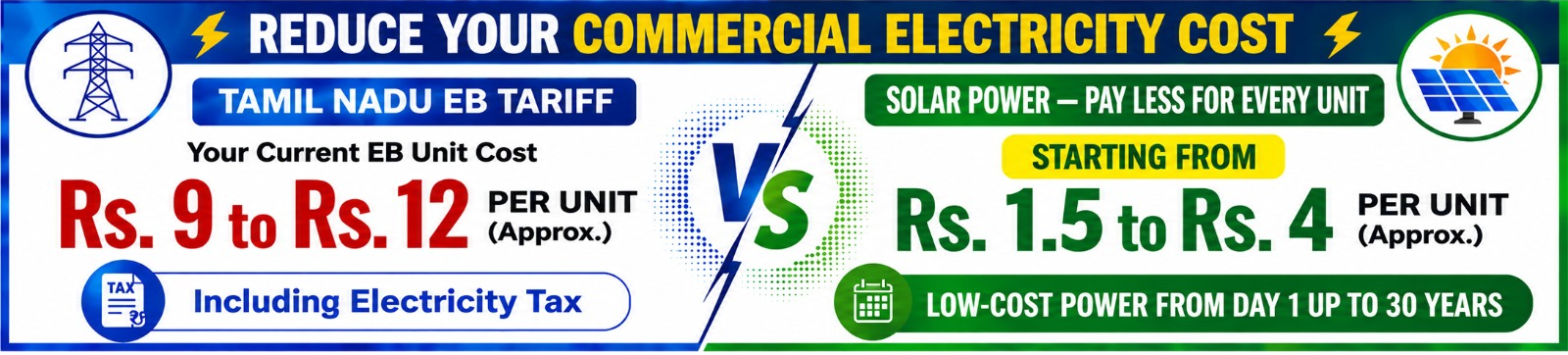
With electricity tariffs in India steadily rising and grid reliability still a concern in many industrial zones, businesses are increasingly turning to solar energy as a strategic investment rather than just a sustainability initiative.
A 1 MW solar power plant is particularly attractive for medium to large commercial and industrial operations. It not only reduces dependency on expensive grid power but also helps companies meet ESG (Environmental, Social, and Governance) goals—something that is becoming critical for investors and global partnerships.
In 2026, solar is no longer an “alternative”—it’s a financial decision.
A well-designed 1 MW system can:
- Offset a major portion of your electricity bill
- Deliver strong long-term ROI
- Hedge against future tariff hikes
- Enhance brand image as a sustainable business
Understanding the Core Components: What Drives the Cost of a 1 MW Solar Plant?
Before diving into total costs, it’s important to understand where your money actually goes in a solar project.
Solar Panels (Modules): The Heart of Your Plant
Solar panels contribute nearly 55–60% of the total project cost, making them the most critical component.
In 2026, most commercial projects in India are shifting toward:
- Monocrystalline Panels – Higher efficiency, better for limited space
- Bifacial Panels – Generate power from both sides (ideal for ground-mounted plants)
- TOPCon Technology Panels – The emerging standard
Why TOPCon? TOPCon (Tunnel Oxide Passivated Contact) panels offer:
- Higher efficiency (22%+)
- Better performance in low-light conditions
- Lower degradation over time
For a 1 MW plant, high-efficiency panels reduce land requirements and improve ROI.
Inverters: The Brains of the Operation
Inverters convert DC electricity generated by panels into usable AC power.
For 1 MW projects, two main types are used:
1. String Inverters
- Modular design
- Easier maintenance
- Better performance tracking
2. Central Inverters
- Lower upfront cost
- Suitable for large, uniform installations
- Higher capacity units
👉 In 2026, many EPC companies prefer string inverters for reliability and monitoring advantages.
Mounting Structures & Balance of System (BOS)
These are often overlooked but essential for performance and durability.
Mounting Structures
- Ground-mounted systems: Require land, better cooling, higher efficiency
- Rooftop systems: Save land but require strong structural integrity
Balance of System (BOS) Includes:
- Cables and wiring
- Junction boxes
- Transformers
- SCADA monitoring systems
- Earthing and protection systems
These components ensure safety, efficiency, and long-term reliability.
The Bottom Line: A Detailed 1 MW Solar Power Plant Cost Breakdown for 2026
Here’s a realistic cost estimate for a 1 MW solar power plant in India (2026):
| Component | Estimated Cost (INR) | % of Total Cost |
|---|---|---|
| High-Efficiency Solar Panels | ₹2.8 – ₹3.5 Crore | 55–60% |
| Solar Inverters | ₹35 – ₹50 Lakh | 8–10% |
| Mounting Structures | ₹40 – ₹60 Lakh | 10–12% |
| Balance of System | ₹25 – ₹35 Lakh | 5–7% |
| Installation & Commissioning | ₹30 – ₹40 Lakh | 6–8% |
| Grid Connectivity | ₹15 – ₹25 Lakh | 3–5% |
✅ Total Estimated Cost (Excluding Land):
👉 ₹4.5 Crore to ₹6.1 Crore
Key Factors That Influence Cost
Your actual project cost can vary based on:
- Location (Tamil Nadu vs Rajasthan vs Gujarat)
- Panel technology (TOPCon vs standard mono)
- Rooftop vs ground-mounted setup
- EPC contractor pricing
- Distance from grid connection point
- Labor and logistics
👉 Smart planning and vendor selection can reduce costs by 10–15%
Beyond the Price Tag: Calculating Your Return on Investment (ROI)
A solar plant is not an expense—it’s an income-generating asset.
How Much Power Will a 1 MW Solar Plant Generate in India?
On average:
- Daily Generation: 4,000 – 5,000 units
- Monthly Generation: 1.2 – 1.5 lakh units
- Annual Generation: 14 – 18 lakh units
In high-irradiance states like Tamil Nadu, generation is typically on the higher side.
Revenue & Savings: The Real Financial Impact
Let’s assume:
- Electricity cost: ₹7 per unit
- Annual generation: 15 lakh units
👉 Annual savings = ₹1.05 Crore
Payback Period
- Project Cost: ₹5 Crore (average)
- Annual Savings: ₹1–1.2 Crore
👉 Payback Period: 4–6 years
Long-Term ROI
- Plant lifespan: 25+ years
- After payback: nearly free electricity
👉 Total lifetime savings can exceed ₹20–25 Crore
Land & Area Requirements: How Much Space Do You Need?
Ground-Mounted Plant
- Required land: 3–4 acres per MW
Rooftop Solar Plant
- Required space: 80,000 – 100,000 sq. ft.
Key Site Considerations
- Shadow-free area
- Proper panel orientation (south-facing)
- Accessibility for maintenance
- Structural strength (for rooftops)
👉 Higher efficiency panels = less land required
The Myth of “No Subsidy”
While central subsidies for commercial projects are limited, businesses can still benefit from:
- State-specific policies (varies by state)
- Net metering benefits
- Open access policies
States like Tamil Nadu, Gujarat, and Karnataka offer attractive frameworks for industrial solar adoption.
Accelerated Depreciation (AD): A CFO’s Advantage
One of the biggest financial benefits:
- Up to 40% depreciation in the first year
- Reduces taxable income
- Improves project IRR significantly
👉 This alone can improve ROI by 4–6%
Financing Your Project: CAPEX vs OPEX Models
CAPEX Model
- You own the system
- Higher upfront investment
- Maximum long-term savings
OPEX Model
- Third party owns the system
- You pay per unit consumed
- No upfront cost
👉 Ideal choice depends on your cash flow and financial strategy
From Plan to Power: Your 1 MW Solar Project Execution Roadmap
1 MW Solar Project Report (Why It Matters)
A detailed project report includes:
- Technical design
- Financial projections
- ROI analysis
- Risk assessment
- Regulatory approvals
This is essential for:
- Bank loans
- Investor approvals
- Internal decision-making

Choosing Your EPC Partner: The Most Critical Decision
Your EPC (Engineering, Procurement, Construction) partner can make or break your project.
Checklist for Selection:
- Proven track record (MW-scale projects)
- Technology expertise (TOPCon, SCADA, etc.)
- Strong after-sales support
- Transparent pricing
- Performance guarantees
👉 Don’t just choose the cheapest—choose the most reliable.
Frequently Asked Questions
Typically ranges between ₹40–₹60 lakh, depending on technology and installation type.
- Annual O&M cost: ₹5–10 lakh per MW
- Includes cleaning, monitoring, repairs
Yes, if:
- You have sufficient space (~1 lakh sq. ft.)
- The structure can handle the load
👉 Total time: 3–5 months
- Project planning: 2–4 weeks
- Installation: 2–3 months
👉 Total time: 3–5 months
- TOPCon panels (best performance)
- Bifacial panels (for ground-mounted system
Final Thoughts: Is a 1 MW Solar Plant Worth It in 2026?
Absolutely. With rising electricity costs, improved solar technology, and strong financial incentives, a 1 MW solar power plant is one of the most reliable long-term investments for Indian businesses today.
It offers:
- Predictable energy costs
- High ROI
- Sustainability benefits
- Energy independence