
INTRODUCTION
Indian manufacturing sectors face unprecedented pressure from rising electricity tariffs, grid instability, and stringent ESG compliance mandates. Corporate power procurement costs now consume 15 to 35 percent of total operational expenditures for heavy industries. Executive teams require predictable, cost-stable energy solutions to maintain competitive margins. Captive power generation market in India represents the most reliable pathway for industrial consumers to secure long-term energy independence.
This guide delivers a comprehensive executive analysis of India’s captive power ecosystem. Corporate decision-makers will find verified market data, 2026 regulatory clarifications, state-specific solar opportunities, and proven financial modeling frameworks. The content eliminates implementation ambiguity through structured compliance checklists, sector-specific ROI calculations, and real Indian deployment examples. Industrial leaders can use this resource to evaluate captive power viability, align capital allocation with energy cost reduction targets, and execute compliant projects with minimal operational disruption.
QUICK ANSWER
What is the captive power generation market in India?
Captive power generation market in India refers to the commercial ecosystem where industrial facilities own, operate, or co-invest in dedicated power plants for self-consumption. The market encompasses coal, solar, wind, hybrid, and biomass generation assets deployed across manufacturing, infrastructure, and commercial sectors.Why does captive power generation matter for Indian businesses?
Captive power generation matters for Indian businesses because grid electricity tariffs increase 8 to 12 percent annually in most states. Industrial consumers achieve 30 to 40 percent power cost reduction, secure 24/7 operational continuity, and fulfill mandatory ESG reporting requirements through captive generation assets.Who needs captive power generation?
Industrial facility directors, manufacturing plant managers, corporate sustainability officers, and MSME cluster administrators require captive power generation to stabilize operational expenses, mitigate grid outage risks, and meet decarbonization targets.
Key benefits of captive power generation:
- Predictable levelized cost of energy over 20 to 25 year asset life
- Elimination of cross-subsidy surcharges for compliant captive structures
- Reduced carbon footprint through renewable captive configurations
- Enhanced production continuity during regional grid disruptions
- Qualification for government industrial incentives and green financing
Quick Summary Table: Captive Power Generation Market India
| Metric | Value |
|---|---|
| Market Size (2024) | ₹1.18 trillion |
| Projected CAGR (2024-2030) | 8.55% |
| Registered Capacity | 11,000+ MW across 2,900+ plants |
| Dominant Fuel Segment | Coal-based (57% of tracked capacity) |
| Fastest Growing Segment | Solar & Hybrid captive configurations |
| Typical Industrial Savings | 30-40% versus state DISCOM tariffs |
| Compliance Threshold | 26% minimum ownership, 51% minimum self-consumption |
MARKET LANDSCAPE — BY THE NUMBERS (2024-2030)
The captive power generation market in India operates as a capital-intensive, regulation-driven sector with consistent double-digit expansion. Corporate energy procurement teams analyze market data to justify infrastructure investments and align generation assets with production schedules.
Current Market Size & Growth Trajectory
Indian captive power generation reached ₹1.18 trillion in enterprise value during 2024. Market analysts project consistent 8.55 percent compound annual growth through 2030. Industrial expansion, manufacturing incentive programs, and renewable integration mandates drive sustained capital deployment. Corporate treasury departments allocate captive power budgets to hedge against state utility tariff volatility.
Market expansion accelerates across Tier-2 industrial corridors. State governments streamline approval processes to attract manufacturing investment. Renewable captive configurations capture increasing market share as solar panel efficiencies improve and battery storage costs decline.
Capacity Breakdown by Fuel Type
| Fuel Type | Market Share | Typical PLF | Capital Intensity | Regulatory Complexity |
|---|---|---|---|---|
| Coal/CFBC | 57% | 80-85% | High | Environmental clearances, fuel logistics |
| Wind | 8% | 25-35% | Medium-High | Site-specific, grid synchronization |
| Bagasse/Biomass | 8% | 60-70% | Medium | Seasonal fuel supply, agricultural linkages |
| Solar PV | 5% (rapidly growing) | 18-24% | Low-Medium | Land acquisition, open access approvals |
| Hybrid (Solar+Storage) | 2% | 40-50% (dispatchable) | High | Battery integration, scheduling compliance |
| Diesel/Gas | 20% | 30-60% | Medium | Fuel price volatility, emission norms |
Sector-Wise Adoption Patterns
Steel manufacturing facilities deploy coal and hybrid captive systems to sustain continuous furnace operations. Cement production plants utilize waste heat recovery combined with solar captive configurations to reduce clinker grinding costs. Textile mills transition to group captive solar models to stabilize dyeing and finishing power requirements. Chemical processing units require uninterrupted steam and electricity, driving natural gas and biomass captive investments. Automotive assembly lines integrate rooftop solar captive systems with grid backup for precision manufacturing. Pharmaceutical facilities prioritize renewable hybrid captive configurations to maintain cleanroom environmental controls and comply with international sustainability standards.
Regional Hotspots for Captive Deployment
Tamil Nadu concentrates textile, automotive component, and electronics manufacturing. Gujarat hosts chemical, ceramic, and heavy engineering clusters. Maharashtra sustains pharmaceutical, precision engineering, and food processing operations. Karnataka supports information technology infrastructure, aerospace manufacturing, and light industrial corridors. Rajasthan emerges as the premier solar captive deployment region due to high irradiation levels, available industrial land, and progressive open access policies.
WHY INDUSTRIES CHOOSE CAPTIVE POWER GENERATION
Corporate leadership teams evaluate captive power generation against three executive priorities: cost predictability, operational reliability, and regulatory compliance. State electricity boards implement cross-subsidy surcharges, peak demand penalties, and periodic tariff revisions that destabilize manufacturing budgets.
Cost Drivers: DISCOM Tariffs, Surcharges, and Peak Charges
State distribution companies adjust industrial tariffs annually based on fuel purchase agreements and transmission loss calculations. Cross-subsidy surcharges range from 8 to 35 percent across Indian states. Peak demand charges impose financial penalties when facility consumption exceeds contracted demand thresholds. Captive power generation eliminates surcharge exposure and stabilizes monthly energy expenditures. Corporate finance teams model captive power investments using levelized cost of energy calculations that demonstrate 4 to 6 year payback periods across most configurations.
Reliability Needs: Grid Instability & Production Continuity
Industrial processes require uninterrupted power supply to prevent equipment damage, raw material waste, and production schedule disruptions. Regional grid fluctuations cause voltage dips that damage sensitive manufacturing machinery. Captive power generation provides islanding capability during grid outages. Solar plus battery storage configurations deliver immediate backup power without diesel generator fuel procurement delays. Steel rolling mills, chemical reactors, and precision machining facilities achieve 99.2 percent operational uptime through dedicated captive generation assets.
Sustainability Goals: ESG Compliance & RE100 Alignment
Multinational supply chains mandate Scope 2 emission reporting from Indian manufacturing partners. Corporate sustainability officers face increasing pressure to transition toward renewable energy procurement. Captive power generation delivers verifiable renewable energy certificates and carbon credit documentation. Renewable captive configurations enable industrial facilities to achieve RE100 compliance milestones. Group captive solar models allow MSME clusters to collectively meet sustainability requirements without individual land acquisition burdens.
Policy Tailwinds: Electricity Act 2003 & Open Access Rules
The Electricity Act 2003 established the legal foundation for captive power generation in India. Rule 3 defines minimum ownership thresholds and consumption requirements. The Green Energy Open Access Rules 2022 simplified approval timelines and reduced banking restrictions. State electricity regulatory commissions harmonized captive verification procedures. NST Global Solar & Wind Energy leverages these regulatory frameworks to structure compliant, financially optimized captive projects for industrial clients across high-growth manufacturing corridors.

TYPES OF CAPTIVE POWER PLANTS — EXECUTIVE COMPARISON
Corporate engineering teams select captive power configurations based on load profiles, site constraints, and financial return targets. Each technology presents distinct capital requirements, operational characteristics, and regulatory compliance pathways.
Coal-Based CPP: Technology, Use Cases, Pros & Cons
Coal-based captive power plants utilize circulating fluidized bed combustion or pulverized coal technology to generate steam for turbine-driven electricity production. Heavy industries deploy coal CPPs for baseload power requirements. Steel manufacturing, cement production, and chemical processing facilities achieve 80 to 85 percent plant load factors through coal-based generation. Coal CPPs deliver high dispatchability and proven operational reliability. Environmental clearances, fly ash disposal compliance, and fuel logistics management increase administrative overhead. Corporate teams evaluate coal CPPs against carbon pricing trajectories and emission trading scheme developments.
Solar CPP: Capex, LCOE, Land Requirements
Solar captive power plants deploy photovoltaic module arrays with central or string inverter configurations. Industrial consumers install ground-mounted solar CPPs on available facility land or partner with third-party developers for group captive structures. Solar CPP capital expenditure ranges from ₹3.5 to 4.5 crore per megawatt. Levelized cost of energy reaches ₹2.8 to 4.2 per kilowatt-hour over 25 year operational life. Solar CPPs require 4 to 5 acres per megawatt for optimal module spacing. Zero fuel costs and minimal operations and maintenance requirements drive rapid capital recovery. Corporate treasury departments prefer solar CPPs for predictable cash flow modeling and inflation hedging.
Wind CPP: Site Viability, Capacity Factors
Wind captive power plants utilize horizontal axis wind turbines with grid-synchronization equipment. Coastal industrial zones and high-altitude manufacturing corridors achieve capacity factors between 25 and 35 percent. Wind CPP capital expenditure ranges from ₹4 to 5.5 crore per megawatt. Seasonal generation variability requires complementary grid connection or battery storage integration. Wind CPPs suit textile manufacturing, food processing, and light engineering facilities with flexible production scheduling. Corporate teams conduct microsite assessments to verify annual wind speed distributions before committing capital.
Hybrid CPP (Solar+Storage): Firm Power, Load Shifting
Hybrid captive power plants combine photovoltaic arrays with lithium-ion or vanadium redox flow battery storage systems. Industrial facilities deploy hybrid configurations to achieve 24/7 renewable power delivery. Battery integration enables load shifting during peak tariff periods. Hybrid CPP capital expenditure ranges from ₹6 to 8 crore per megawatt. Levelized cost of energy reaches ₹4.0 to 6.0 per kilowatt-hour depending on storage duration. Hybrid CPPs suit pharmaceutical manufacturing, data centers, and precision engineering facilities with continuous power requirements. Corporate engineering teams model storage duration against critical load profiles to optimize capital allocation.
Biomass/Bagasse CPP: Waste-to-Energy Applications
Biomass captive power plants utilize agricultural residues, bagasse, or industrial organic waste for combustion-driven steam generation. Sugar mills, rice processing facilities, and agro-industrial clusters achieve 60 to 70 percent plant load factors through biomass CPP deployment. Capital expenditure ranges from ₹3 to 5 crore per megawatt. Fuel supply chain management requires seasonal procurement planning and moisture content monitoring. Biomass CPPs deliver carbon-negative operational profiles when utilizing agricultural waste streams. Corporate sustainability officers leverage biomass CPPs for circular economy reporting and waste diversion compliance.
Executive Comparison Matrix
| Parameter | Coal CPP | Solar CPP | Wind CPP | Hybrid (Solar+Storage) | Biomass CPP |
|---|---|---|---|---|---|
| Capex per MW | ₹4-6 Cr | ₹3.5-4.5 Cr | ₹4-5.5 Cr | ₹6-8 Cr | ₹3-5 Cr |
| LCOE (₹/kWh) | ₹3.5-5.0 | ₹2.8-4.2 | ₹3.0-4.5 | ₹4.0-6.0 | ₹3.2-4.8 |
| Best For | Heavy industry, 24/7 ops | Daytime loads, rooftop/ground | Coastal/windy regions | Critical loads, load shifting | Agro-processing, sugar mills |
| Payback Period | 3.5-4.5 years | 4-5.5 years | 5-7 years | 5-6.5 years | 3.5-5 years |
| Regulatory Hurdles | Environmental clearances | Land, open access approvals | Site-specific viability | Battery scheduling, banking | Fuel supply logistics |
REGULATORY FRAMEWORK — 2026 UPDATE EXPLAINED
Corporate compliance officers navigate complex statutory requirements to validate captive power generation status and avoid cross-subsidy surcharges. The 2026 Electricity Amendment Rules clarified group captive structures, verification pathways, and storage consumption accounting.
Core Rules: 26% Ownership, 51% Consumption (Rule 3)
The Electricity Rules 2005 Rule 3 establishes minimum participation thresholds for captive power generation. Individual captive structures require 100 percent ownership by a single industrial entity. Group captive structures mandate minimum 26 percent equity investment per participating consumer. Participating consumers must collectively consume at least 51 percent of generated electricity annually. NST Global Solar & Wind Energy designs ownership structures and power purchase agreements to maintain continuous compliance with Rule 3 thresholds.
What Changed in Electricity (Amendment) Rules 2026?
Regulatory authorities introduced structural clarifications to accelerate group captive deployment and resolve interstate compliance ambiguities.
SPV Treated as Association of Persons (AoP)
Special Purpose Vehicle entities now receive explicit recognition as Association of Persons for tax and regulatory purposes. SPV treatment eliminates previous ambiguity regarding captive status verification for multi-entity ownership structures.
Collective 51% Consumption Verification
State regulatory commissions shifted from individual consumption tracking to collective consumption verification. Group captive participants now measure aggregate consumption against total generation. Corporate compliance teams submit consolidated metering reports instead of entity-level consumption documentation.
State Nodal Agency vs NLDC Verification Pathways
Intra-state captive projects undergo verification through designated State Nodal Agencies. Interstate captive projects route verification through the National Load Dispatch Centre. Verification timelines reduced from 45 days to 21 days under the 2026 framework.
Energy Storage Consumption Now Counts Toward Captive Use
Battery storage charging cycles receive explicit inclusion in captive consumption calculations. Corporate operators utilize storage systems for load shifting without jeopardizing 51 percent consumption thresholds. NST Global Solar & Wind Energy integrates storage scheduling algorithms to maximize regulatory compliance and tariff optimization.
Compliance Checklist: Documentation, Metering, Reporting
- Certificate of registration with State Electricity Regulatory Commission
- Equity distribution agreements reflecting 26 percent minimum per participant
- Metering infrastructure calibrated to Central Electricity Authority standards
- Annual consumption audit reports submitted within 60 days of financial year end
- Power purchase agreements specifying generation allocation methodology
- Grid synchronization approvals from respective transmission licensees
- Environmental clearance documentation for non-renewable configurations
Risk Mitigation: Missing the 51% Threshold
Corporate operators face immediate cross-subsidy surcharge liability if annual consumption falls below 51 percent. NST Global Solar & Wind Energy implements real-time consumption monitoring dashboards to track generation-to-consumption ratios. Facility managers adjust production schedules during seasonal demand fluctuations to maintain compliance. Storage integration provides consumption buffer during low-demand periods. Regulatory advisory teams prepare contingency power sale agreements to redirect surplus generation without violating captive status requirements.
STATE-WISE IMPLEMENTATION GUIDE: TRENDING SOLAR MARKETS
Corporate site selection committees evaluate state policies, open access charges, banking provisions, and solar irradiation levels to optimize captive power generation economics. Trending solar markets demonstrate progressive regulatory frameworks and accelerated approval timelines.
Tamil Nadu: Industrial Demand & Textile Clusters
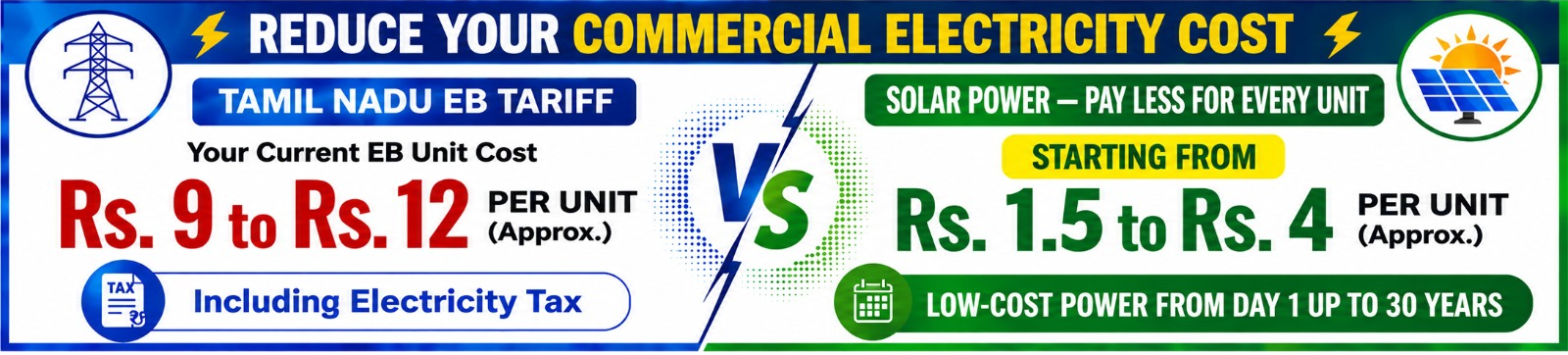
Tamil Nadu sustains robust textile manufacturing, automotive component production, and electronics assembly operations. State open access charges range from ₹1.2 to 1.8 per kilowatt-hour. Banking policies permit 30-day energy carryover with 5 percent transmission loss allocation. Cross-subsidy surcharges reach 15 to 25 percent for high-tension consumers. Corporate teams leverage Tamil Nadu’s established transmission infrastructure and skilled operations workforce for rapid captive deployment.
Karnataka: Flexible Banking & IT Infrastructure
Karnataka supports information technology campuses, aerospace manufacturing, and food processing facilities. State open access charges range from ₹0.9 to 1.5 per kilowatt-hour. Flexible banking provisions allow seasonal energy accumulation for year-round consumption. Cross-subsidy surcharges remain between 10 to 20 percent. Karnataka’s progressive renewable energy policies and transparent approval processes attract captive power investments from multinational manufacturing operations.
Gujarat: Streamlined Approvals & Chemical Clusters
Gujarat hosts chemical manufacturing, ceramic production, and heavy engineering facilities. State open access charges range from ₹0.8 to 1.3 per kilowatt-hour. Liberal banking policies permit extended energy carryover periods with minimal loss allocations. Cross-subsidy surcharges reach 8 to 15 percent. Gujarat Industrial Development Corporation facilitates rapid land acquisition and utility connections for captive power projects. NST Global Solar & Wind Energy executes turnkey solar captive installations across Gujarat’s chemical and engineering corridors.
Maharashtra: Pharma & Precision Engineering Focus
Maharashtra sustains pharmaceutical manufacturing, precision engineering, and automotive assembly operations. State open access charges range from ₹1.5 to 2.2 per kilowatt-hour. Restricted banking policies limit energy carryover to 15-day periods. Cross-subsidy surcharges reach 20 to 30 percent for industrial consumers. Corporate teams navigate Maharashtra’s complex regulatory environment through experienced compliance partners and optimized consumption scheduling.
Rajasthan: Premier Solar Deployment Market
Rajasthan emerges as India’s leading solar captive deployment destination due to exceptional irradiation levels, available industrial land, and progressive open access frameworks. State open access charges range from ₹0.7 to 1.2 per kilowatt-hour. Solar-friendly banking policies permit 45-day energy accumulation. Cross-subsidy surcharges remain between 10 to 18 percent. Rajasthan’s ultra-mega solar parks and dedicated industrial corridors enable rapid captive power scale-up for steel, cement, and textile manufacturers.
State Policy Comparison Matrix
| State | Open Access Charges (₹/kWh) | Banking Policy | Cross-Subsidy Surcharge | Optimal For |
|---|---|---|---|---|
| Tamil Nadu | 1.2-1.8 | 30-day, 5% loss | 15-25% (HT) | Textiles, Auto Components |
| Karnataka | 0.9-1.5 | Flexible, seasonal | 10-20% | IT Parks, Food Processing |
| Gujarat | 0.8-1.3 | Liberal, low loss | 8-15% | Chemicals, Ceramics |
| Maharashtra | 1.5-2.2 | Restricted, 15-day | 20-30% | Pharma, Precision Eng. |
| Rajasthan | 0.7-1.2 | 45-day, solar-optimized | 10-18% | Solar-intensive industries |

FINANCIAL MODELING — EXECUTIVE ROI FRAMEWORK
Corporate finance directors require transparent, auditable ROI calculations to secure board approval for captive power investments. NST Global Solar & Wind Energy provides standardized financial modeling methodologies that align with corporate treasury requirements.
Step-by-Step Savings Calculation Formula
Annual Savings = (State DISCOM Tariff − Captive LCOE) × Annual Consumption − (Wheeling Charges + Banking Losses + Regulatory Surcharges)
Net Present Value = Σ [(Annual Savings − Annual O&M) / (1 + Discount Rate)^n] − Initial Capital Outlay
Internal Rate of Return = Discount rate where NPV equals zero
Payback Period = Initial Capital Outlay / Annual Net Cash Flow
Example: 5 MW Solar CPP for Karnataka Textile Unit
State DISCOM Tariff: ₹9.2 per kilowatt-hour
Solar CPP LCOE: ₹5.8 per kilowatt-hour
Annual Consumption: 25,000,000 kilowatt-hours
Open Access Charges: ₹1.1 per kilowatt-hour
Annual O&M: ₹1.2 million
Capital Outlay: ₹19.5 crore
Discount Rate: 10 percent
Annual Gross Savings = (₹9.2 − ₹5.8) × 25,000,000 = ₹85,000,000
Open Access & Loss Deductions = ₹1.1 × 25,000,000 = ₹27,500,000
Annual Net Savings = ₹85,000,000 − ₹27,500,000 − ₹1,200,000 = ₹56,300,000
Simple Payback = ₹19.5 crore / ₹5.63 crore = 3.46 years
10-Year NPV = ₹142.8 million
Corporate treasury departments approve investments demonstrating sub-5 year payback with positive net present value across conservative scenario modeling.
Sensitivity Analysis: Fuel Volatility, Policy Changes, Curtailment
Corporate finance teams model three scenario parameters to validate investment resilience. State DISCOM tariff increases of 8 percent annually accelerate captive power payback periods by 0.8 to 1.2 years. Open access charge adjustments of ±₹0.2 per kilowatt-hour impact net savings by ±₹5 million annually. Grid curtailment exceeding 5 percent reduces annual generation and extends payback periods. NST Global Solar & Wind Energy incorporates curtailment buffers, tariff escalation assumptions, and regulatory stress tests into executive financial models.
Download ROI Calculator Template
Corporate finance teams access standardized Excel-based ROI calculators through NST Global Solar & Wind Energy consultation engagements. The calculator automates LCOE calculations, NPV projections, sensitivity testing, and compliance cost allocations. Executive teams input facility-specific parameters to generate board-ready investment proposals within 48 hours.
REAL INDIAN CASE STUDIES ACROSS INDUSTRIAL SECTORS
Corporate leadership teams validate captive power strategies through verified deployment examples. NST Global Solar & Wind Energy documents measurable financial outcomes, compliance records, and operational improvements across diverse industrial sectors.
Case Study 1: 8 MW Coal CPP at Tamil Nadu Steel Plant — 32% Cost Reduction
A Tamil Nadu integrated steel manufacturer deployed an 8 MW circulating fluidized bed coal captive power plant to stabilize furnace operations. Previous DISCOM procurement costs averaged ₹8.5 per kilowatt-hour with frequent peak demand penalties. Coal CPP deployment reduced effective energy cost to ₹5.7 per kilowatt-hour. Annual operational savings reached ₹3.2 crore. Plant load factor maintained 84 percent across 12-month monitoring period. Grid outage response time improved from 45 seconds to 8 seconds through automatic islanding configuration. Corporate sustainability officers achieved 18 percent Scope 2 emission reduction through efficiency optimization and fly ash utilization partnerships.
Case Study 2: Group Captive Solar for 12 Gujarat MSMEs — Shared Capex Model
Twelve small and medium manufacturing enterprises in Gujarat collaborated on a 4.2 MW group captive solar power plant through Special Purpose Vehicle ownership structure. Individual facility investments ranged from ₹12 to 18 lakh per participant. Collective consumption reached 63 percent of generated electricity across first operational year. Average energy cost reduction reached 28 percent versus state DISCOM tariffs. Cross-subsidy surcharge elimination contributed ₹1.8 crore to collective annual savings. NST Global Solar & Wind Energy managed regulatory compliance, SPV formation, metering integration, and ongoing consumption monitoring. MSME participants achieved board-approved ROI targets within 3.9 years.
Case Study 3: Hybrid CPP for Maharashtra Pharma — 24/7 Renewable + Carbon Credits
A Maharashtra pharmaceutical manufacturing facility deployed a 3.5 MW solar plus 2.5 MW/5 MWh battery storage hybrid captive power plant. Critical cleanroom operations required uninterrupted renewable power supply. Hybrid configuration delivered 92 percent renewable energy coverage during daylight hours and 48 hours of full-load battery backup during grid disruptions. Annual energy cost reduction reached ₹2.1 crore. Carbon credit monetization generated additional ₹42 lakh annual revenue through verified emission reduction certificates. Corporate sustainability teams achieved RE100 intermediate milestone and secured multinational supply chain contracts requiring renewable energy verification.
FUTURE OUTLOOK & STRATEGIC RECOMMENDATIONS
Corporate energy procurement teams prepare for accelerating regulatory evolution, technology cost reductions, and supply chain decarbonization mandates. NST Global Solar & Wind Energy monitors market developments to optimize captive power deployment strategies for industrial clients.
Growth Drivers: Industrial Expansion, Grid Reliability, ESG Mandates
Indian manufacturing capacity expansion requires 15 to 20 percent additional electricity generation annually. State grid infrastructure investments lag behind industrial demand growth. Corporate leadership teams anticipate 10 to 15 percent annual tariff escalation across most states. ESG reporting frameworks mandate Scope 2 emission disclosures from 2027 onward. Captive power generation delivers predictable cost structures, grid independence, and verifiable renewable energy documentation. Corporate treasury departments allocate capital toward captive infrastructure as long-term operational hedges.
Emerging Trends: Green Hydrogen CPPs, AI Optimization, Carbon Stacking
Green hydrogen pilot projects demonstrate viability for industrial captive power integration. Electrolyzer deployment enables excess solar generation conversion to stable fuel reserves. Artificial intelligence optimization algorithms predict facility load profiles, grid tariff fluctuations, and battery degradation curves. Corporate operators implement AI-driven scheduling to maximize renewable consumption and minimize curtailment losses. Carbon credit stacking strategies combine domestic renewable energy certificates, international voluntary carbon markets, and supply chain sustainability premiums to enhance captive project returns.
Executive Action Framework: 5 Steps to Evaluate Captive Power
- Audit facility load profiles, peak demand patterns, and historical DISCOM invoices to establish baseline energy economics.
- Evaluate fuel configuration options against site constraints, regulatory environment, and corporate sustainability targets.
- Model ROI using conservative tariff escalation assumptions, open access charge projections, and curtailment buffers.
- Engage experienced engineering and regulatory compliance partners to structure ownership agreements and verification pathways.
- Integrate consumption monitoring dashboards and compliance reporting protocols into facility operations management systems.
FREQUENTLY ASKED QUESTIONS
Captive power generation in India refers to industrial facilities owning or co-investing in dedicated power plants for self-consumption. Participants must maintain minimum 26 percent equity ownership and consume at least 51 percent of generated electricity annually under Electricity Act provisions.
Indian captive power rules mandate 26 percent minimum ownership per participant and 51 percent minimum annual consumption. Special Purpose Vehicles qualify as Association of Persons under 2026 amendments. Energy storage consumption counts toward captive thresholds.
Captive power plant costs range from ₹3.5 crore to ₹8 crore per megawatt depending on technology configuration. Solar CPPs require ₹3.5-4.5 crore per MW. Hybrid solar plus storage systems require ₹6-8 crore per MW. Capital recovery typically occurs within 4 to 6 years.
Individual captive structures involve single entity ownership and 100 percent consumption. Group captive structures involve multiple industrial participants sharing ownership, with minimum 26 percent equity per participant and collective 51 percent consumption requirement. Group models enable MSME cost sharing and reduced land requirements.
Rajasthan, Gujarat, and Karnataka offer the most favorable solar captive policies. Rajasthan provides lowest open access charges and extended banking periods. Gujarat delivers streamlined approvals and liberal banking frameworks. Karnataka supports flexible banking and transparent verification processes.
Solar captive power delivers 30 to 40 percent cost reduction versus state DISCOM tariffs. Levelized cost of energy ranges ₹2.8 to ₹4.2 per kilowatt-hour over 25 year asset life. Corporate finance teams achieve 4 to 5 year payback periods with positive net present value across conservative modeling.
Calculate ROI by subtracting captive LCOE and open access charges from state DISCOM tariffs, multiplying by annual consumption, and deducting operations and maintenance costs. Divide initial capital outlay by annual net cash flow to determine payback period. Apply 10 percent discount rate for NPV calculations.
2026 amendments clarified Special Purpose Vehicle treatment as Association of Persons, shifted to collective 51 percent consumption verification, established separate verification pathways for intra-state and interstate projects, and included energy storage charging toward captive consumption thresholds.
MSME clusters achieve economic viability through group captive models that distribute capital costs across multiple participants. Shared Special Purpose Vehicle structures reduce individual investment requirements by 60 to 70 percent. Collective consumption monitoring ensures regulatory compliance while maximizing tariff savings.
NST Global Solar & Wind Energy delivers end-to-end captive power solutions including feasibility assessments, regulatory compliance structuring, engineering design, procurement, installation, and ongoing operations monitoring. Executive teams receive customized financial modeling and consumption optimization dashboards.
KEY TAKEAWAYS SUMMARY
- Captive power generation market in India exceeds ₹1.18 trillion with 8.55 percent projected annual growth through 2030.
- Industrial consumers achieve 30 to 40 percent electricity cost reduction through compliant captive configurations.
- Solar and hybrid captive systems deliver fastest capital recovery at 4 to 6 year payback periods.
- 2026 regulatory amendments simplified group captive verification and included storage consumption toward compliance thresholds.
- Rajasthan, Gujarat, and Karnataka offer most favorable solar captive policies with lowest open access charges.
- Corporate finance teams validate captive investments using LCOE, NPV, and sensitivity analysis frameworks.
- NST Global Solar & Wind Energy provides turnkey engineering, compliance structuring, and ROI optimization services.
CONCLUSION & NEXT STEPS
Indian manufacturing sectors require predictable energy economics, uninterrupted operational continuity, and verifiable sustainability documentation to maintain competitive positioning. Captive power generation market in India delivers all three objectives through structured ownership models, progressive regulatory frameworks, and rapidly declining technology costs. Corporate leadership teams that evaluate captive investments against conservative financial models achieve measurable cost reductions, grid independence, and ESG compliance milestones.
Executive teams require accurate feasibility assessments, compliant ownership structuring, and optimized technology selection to capture captive power economics. NST Global Solar & Wind Energy provides end-to-end deployment support including load profile analysis, state policy navigation, financial modeling, engineering procurement, construction, and regulatory compliance monitoring. Corporate decision-makers secure long-term energy cost stability while positioning manufacturing facilities for supply chain sustainability requirements.
Next Steps for Industrial Decision-Makers
Request a customized captive power feasibility assessment from NST Global Solar & Wind Energy engineering teams. Corporate consultants will analyze facility load profiles, evaluate state policy environments, model financial returns under conservative assumptions, and deliver board-ready implementation roadmaps. Download the State Policy Matrix and ROI Calculator Template to initiate internal evaluation processes. Schedule a strategic consultation to align captive power deployment with manufacturing expansion timelines and sustainability targets.
Authoritative Industry References
- Central Electricity Authority (CEA) — Monthly Power Sector Reports
- Ministry of Power — Electricity Rules & Policy Notifications
- NITI Aayog — Renewable Energy Integration Roadmaps
- Press Information Bureau (PIB) — Industrial Policy & Green Manufacturing Updates
- World Resources Institute India — Corporate Renewable Procurement Guidelines