
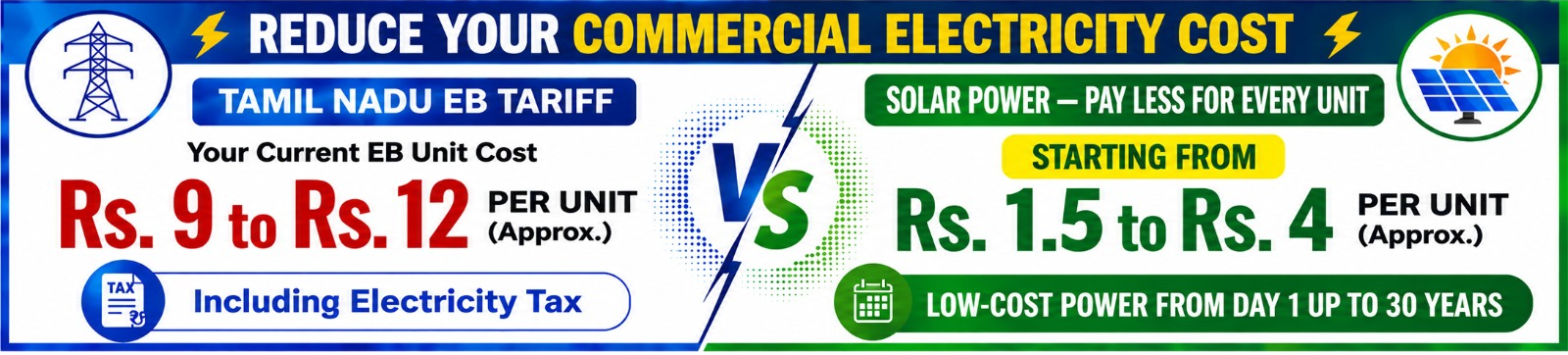
Introduction: Why Housing Societies Are Adopting Solar in 2026
Rising electricity tariffs, frequent power interruptions, and growing environmental awareness are driving housing societies across India — especially in sun-rich cities like Chennai — to invest in rooftop solar power.
But implementing solar for a housing society is fundamentally different from installing it for an individual home. It requires consensus among residents, navigating government subsidies, selecting the right financing model, ensuring technical feasibility, and planning for long-term maintenance.
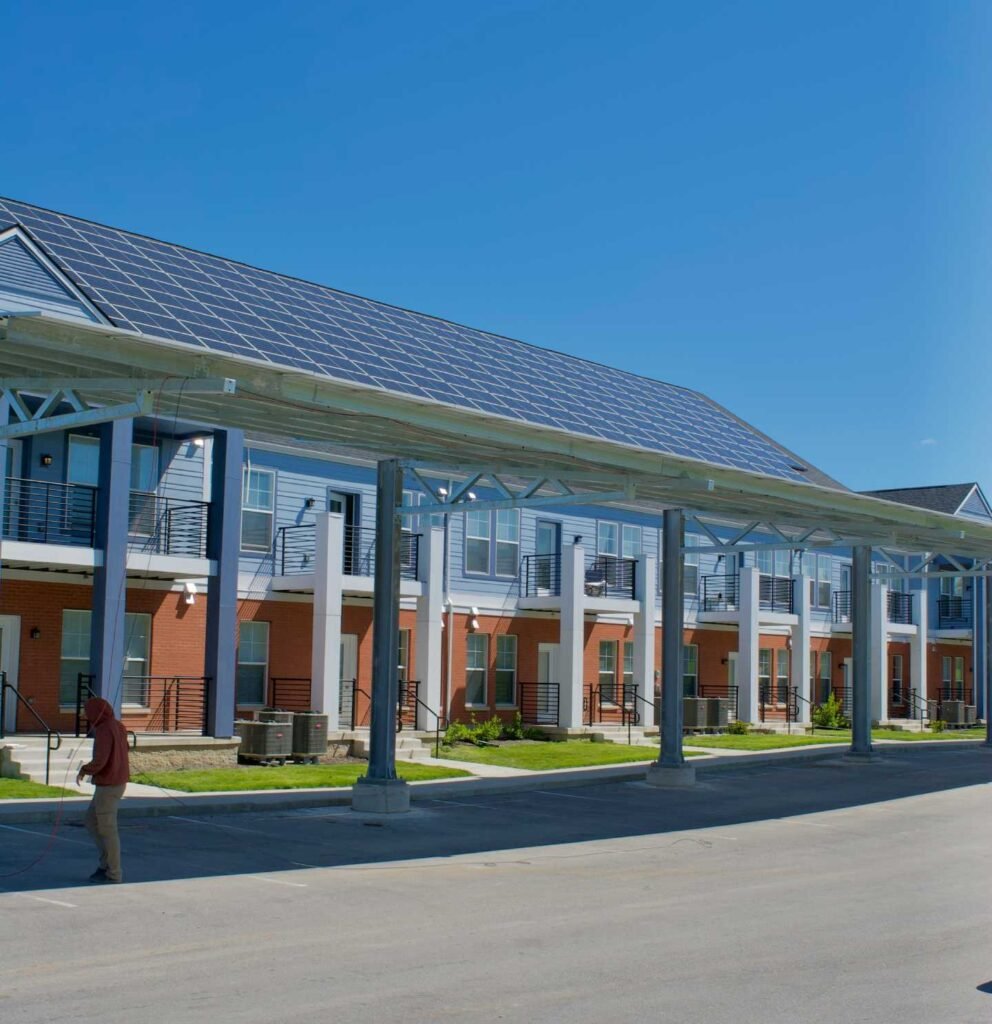
This guide provides a complete, step-by-step resource for Resident Welfare Association (RWA) members, facility managers, and property decision-makers who are evaluating solar for their society. We cover subsidy eligibility under PM Surya Ghar: Muft Bijli Yojana, financing options, realistic ROI expectations, vendor selection criteria, and the approval process specific to Tamil Nadu and Chennai.
Whether your society has 20 flats or 200, this article will help you move forward with clarity and confidence.
How Solar Works for Housing Societies: The Basics
Housing societies have unique advantages when adopting solar power:
| Feature | Individual Home | Housing Society (50+ flats) |
|---|---|---|
| Rooftop Space | Limited (100–300 sq.ft usable) | Large shared terraces (500–3,000+ sq.ft) |
| Typical System Size | 3–10 kW | 50–200 kW (scalable) |
| Cost Per kW | ₹45,000–₹60,000 | ₹35,000–₹48,000 (bulk pricing) |
| Subsidy Process | Individual application | Society-level application via RWA |
| Payback Period | 4–6 years | 3.5–5.5 years (higher utilization) |
Where the Solar Power Is Used
1. Common Area Loads: Elevators, water pumps, corridor lighting, security systems, clubhouse, and gym equipment.
2. Individual Flat Allocation: Through net metering or virtual billing, generated power can be allocated to reduce individual electricity bills.
3. Battery Backup (Optional): Hybrid systems with storage can provide power to critical loads during grid outages.
Chennai Advantage: With approximately 300 sunny days per year and Tamil Nadu’s supportive net metering policy through TANGEDCO, housing societies in Chennai can realistically reduce common-area electricity costs by 25–40%.
Government Subsidies and Incentives: What’s Available in 2026
PM Surya Ghar: Muft Bijli Yojana (Central Government Scheme)
Launched in 2024 and updated for 2026, this scheme provides direct subsidies for rooftop solar installations.
Subsidy Structure for Group Housing Societies:
- Eligible System Size: Up to 500 kW collective capacity for the society
- Subsidy Rate: 30% of the benchmark cost OR ₹78,000 per kW, whichever is lower
- Eligibility Criteria:
- Society must be registered (under Tamil Nadu Societies Registration Act or equivalent)
- Valid electricity connection in the society’s name for common areas
- Rooftop ownership or authorization letter from all members
- Installation by an MNRE-empanelled vendor
Application Process
1. Register on the PM Surya Ghar portal (pmsuryaghar.gov.in)
2. Submit society documents: registration certificate, electricity bill, rooftop ownership proof, resolution authorizing the project
3. Receive technical feasibility approval from the state nodal agency (TEDA in Tamil Nadu)
4. Install system through an empanelled vendor
5. Submit completion report and bank details for direct subsidy transfer
Important: Subsidy is disbursed only after installation and commissioning. Do not make full payment to the vendor until subsidy approval is confirmed.

Tamil Nadu State-Level Support
- TEDA (Tamil Nadu Energy Development Agency) provides additional facilitation and sometimes top-up incentives for group housing.
- TANGEDCO Net Metering Policy: Allows societies to export surplus solar power to the grid and receive credits against future bills.
Financing Options: How to Fund Your Society’s Solar Project
Option 1: CAPEX Model (Society Funds the Project)
- The society pays the full upfront cost using corpus funds or a one-time resident contribution.
- Pros: Society owns the asset, retains 100% of savings and subsidies, full control over maintenance.
- Cons: Requires significant upfront capital; requires 75%+ resident approval for fund usage.
Option 2: RESA/PPA Model (Third-Party Ownership)
- A solar developer installs and owns the system; the society purchases power at a pre-agreed tariff (typically 20–30% lower than grid rates).
- Pros: Zero upfront cost; developer handles maintenance and performance risk.
- Cons: Long-term contract (15–25 years); society does not own the asset or claim subsidies directly.
Option 3: Green Loan or Group Financing
- Banks like SBI, HDFC, and Indian Bank offer “green loans” for housing societies at concessional rates (8.5–10.5% p.a.).
- Pros: Spread cost over 5–10 years; retain asset ownership and subsidy benefits.
- Cons: Requires society creditworthiness; EMI must be factored into monthly maintenance.
Quick ROI Example: 100-Flat Society in Chennai
| Parameter | Value |
|---|---|
| Common Area Monthly Bill (Pre-Solar) | ₹85,000 |
| Proposed Solar System Size | 75 kW |
| Gross Project Cost | ₹36,00,000 |
| Central Subsidy (30%) | ₹10,80,000 |
| Net Cost to Society | ₹25,20,000 |
| Estimated Annual Savings | ₹6,20,000 |
| Simple Payback Period | ~4.1 years |
| System Lifespan | 25 years |
| Estimated 25-Year Savings | ₹1.2+ Crore |
Note: Figures are illustrative. Actual costs and savings depend on site conditions, vendor quotes, and tariff structures.
Step-by-Step Implementation Process
Phase 1: Feasibility & Consensus (Weeks 1–4)
- Conduct rooftop shadow analysis and structural audit
- Estimate energy consumption of common areas
- Hold a general body meeting to present the proposal
- Pass a resolution with at least 75% member approval
Phase 2: Vendor Selection & Quotation (Weeks 5–7)
- Invite proposals from 3–5 MNRE-empanelled vendors
- Evaluate based on: technical proposal, warranty terms, society experience, O&M commitment, and price
- Finalize vendor and sign a detailed work order
Phase 3: Subsidy Application & Approvals (Weeks 8–12)
- Submit application on PM Surya Ghar portal with required documents
- Obtain technical feasibility certificate from TEDA
- Apply for net metering with TANGEDCO
Phase 4: Installation & Commissioning (Weeks 13–16)
- Vendor installs panels, inverters, mounting structure, and net meter
- TANGEDCO inspects and commissions the net meter
- System goes live; monitoring app is activated for the committee
Phase 5: Post-Installation Management
- Assign a “Solar Subcommittee” to monitor performance
- Schedule bi-annual panel cleaning and annual maintenance
- Track savings via monthly bill comparisons
Vendor Selection Checklist: Avoid Costly Mistakes
Do not select a vendor based on price alone. Use this scorecard:
✅ Credentials: MNRE empanelment, ISO certifications, valid electrical contractor license
✅ Experience: Minimum 5 completed housing society projects (ask for references)
✅ Warranty: 25-year linear performance warranty on panels; 5–10 years on inverter; 5 years on workmanship
✅ O&M Commitment: Clear annual maintenance contract with response time SLAs
✅ Transparency: Itemized quotation with make/model of all components; no hidden costs
✅ Local Support: Service team based in or near Chennai for quick troubleshooting
Red Flag: Vendors who promise “100% subsidy approval” or pressure for full payment upfront.
Frequently Asked Questions (FAQ)
A: No. For common-area solar, a resolution passed by 75% of members in a general body meeting is typically sufficient. For individual flat metering integration, consent from participating flat owners is required.
A: This should be defined in your vendor contract. Most societies opt for an Annual Maintenance Contract (AMC) covering cleaning, inspections, and minor repairs.
A: Solar benefits for common areas are tied to the society, not individual owners. For systems with individual metering, the benefit transfers with the flat ownership.
A: Highly recommended. A comprehensive insurance policy covering fire, natural calamities, and third-party liability typically costs 0.5–1% of the system value annually.
Conclusion: Take the Next Step with Confidence
Adopting solar power is one of the most impactful decisions a housing society can make — reducing long-term operational costs, increasing property value, and contributing to environmental sustainability.
The process may seem complex, but with the right preparation, transparent communication, and a trusted vendor partner, your society can complete the journey from idea to installation in under 5 months.
Your Action Checklist:
1. Download our free “RWA Solar Resolution Template” [Link]
2. Schedule a free rooftop feasibility assessment with empanelled vendor
3. Begin the PM Surya Ghar application process early to lock in 2026 subsidy rates
Disclaimer: Subsidy amounts, eligibility criteria, and policy details are subject to change. Always verify current guidelines with the official PM Surya Ghar portal (pmsuryaghar.gov.in) and Tamil Nadu Energy Development Agency (teda.in) before making financial commitments. This article is for informational purposes and does not constitute financial or legal advice.