
Electricity is one of the largest operating expenses for industrial facilities in Tamil Nadu. From textile mills in Tiruppur to automotive plants near Chennai, many factories consume enormous amounts of power every day.
With rising electricity tariffs and demand charges, industrial electricity bills can reach ₹50 lakh to several crores per year, making energy cost management a critical factor for business profitability.
In 2026, many high-consumption factories across Tamil Nadu are actively exploring alternative energy sources such as solar power purchase agreements (PPAs) and open-access renewable energy to reduce their electricity costs.
This article examines the industries and factory clusters in Tamil Nadu that are most likely paying the highest EB (Electricity Board) tariffs and why energy costs are becoming a strategic concern for industrial operations.
Industrial Electricity Tariffs in Tamil Nadu (2026)
Electricity tariffs in Tamil Nadu are regulated by the Tamil Nadu Electricity Regulatory Commission (TNERC) and supplied by the state utility.
Industrial and commercial consumers typically pay significantly higher tariffs than residential users.
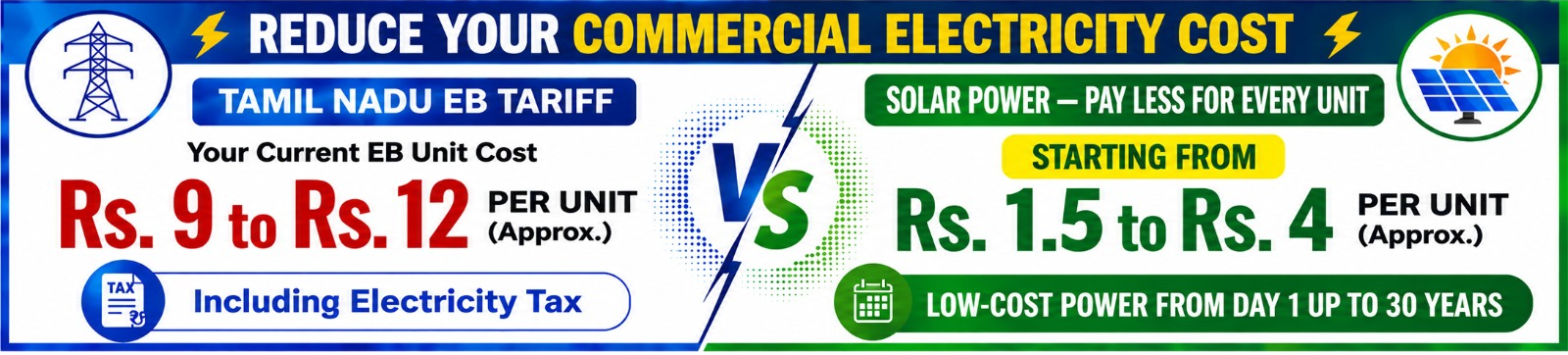
According to recent tariff structures, industrial electricity rates can range around ₹7–₹12 per unit depending on consumption category and demand charges. (NoBroker)
These tariffs may include:
- Energy charges per kWh
- Demand charges based on contracted load
- Power factor penalties
- Cross-subsidy surcharges
- Open-access charges
Tariffs are also periodically revised. In 2025, Tamil Nadu implemented an electricity tariff revision of approximately 3% under a multi-year tariff policy, affecting multiple consumer categories including industries. (The Times of India)
Because of these cost factors, large manufacturing facilities with high electricity consumption often spend tens of crores annually on power procurement.
Industries in Tamil Nadu with the Highest Electricity Consumption
Tamil Nadu is one of India’s most industrialized states. Several sectors rely heavily on electricity for continuous production processes.
The industries with the highest electricity demand include:
Textile Manufacturing
Tamil Nadu is India’s largest textile manufacturing hub, with clusters in Tiruppur, Coimbatore, and Erode.
Spinning mills and dyeing units operate 24/7 machinery such as:
- ring frames
- compressors
- dyeing equipment
- spinning motors
Electricity costs form a major portion of production expenses in this sector.
Foundries and Engineering Industries
The Coimbatore region hosts hundreds of engineering units and foundries that produce components for automotive and industrial machinery.
These facilities operate:
- induction furnaces
- casting equipment
- CNC machines
- heat treatment plants
Such equipment requires high electrical loads and continuous energy supply.
Automotive Manufacturing
Automotive factories and component manufacturers near Chennai, Sriperumbudur, and Hosur consume large amounts of electricity for:
- robotic assembly lines
- welding equipment
- paint shops
- testing facilities
These plants often operate multiple shifts daily, significantly increasing electricity consumption.
Cold Storage and Food Processing
Cold storage warehouses require continuous refrigeration systems that consume large amounts of power.
Similarly, food processing factories depend on:
- chilling systems
- packaging machines
- conveyor systems
- sterilization equipment
Electricity becomes a major operational cost in these sectors.
IT Parks and Data Infrastructure
Large IT parks and technology campuses also have substantial electricity requirements for:
- air conditioning
- data centers
- lighting systems
- computing infrastructure
Even though many facilities have backup power systems, electricity consumption remains extremely high.
Top Industrial Clusters Paying High EB Tariffs
Instead of individual factories, electricity consumption is often concentrated in specific industrial clusters across Tamil Nadu.
These clusters host hundreds of factories with high electricity demand.
Tiruppur – Textile Capital
Tiruppur is known as India’s knitwear export hub. The district houses thousands of spinning, knitting, and dyeing units.
Factories here operate energy-intensive machinery around the clock, making electricity one of the largest production costs.
Coimbatore – Engineering and Foundry Hub
Coimbatore is often referred to as the “Manchester of South India.”
The region has:
- engineering manufacturers
- pump manufacturers
- casting units
- precision machining companies
Many foundries use high-capacity induction furnaces, leading to heavy electricity consumption.
Hosur – Manufacturing and Electronics
Hosur has become a major industrial zone with large factories producing:
- automotive components
- electronics
- consumer appliances
Factories here often operate large automated manufacturing lines.
Sriperumbudur – Electronics and Automotive Corridor
Located near Chennai, Sriperumbudur hosts several global manufacturers including electronics and automobile companies.
Large factories in this region operate energy-intensive production processes and large HVAC systems.
Sivakasi – Printing and Fireworks
Sivakasi is known for its printing, packaging, and fireworks industries.
Industrial facilities here rely heavily on power for:
- printing machines
- packaging systems
- chemical processing
Estimated List: 50 Factory Segments Paying High EB Tariffs
Below is an industry-based list representing 50 major factory categories likely paying high electricity tariffs in Tamil Nadu.
Textile and Apparel Industry
- Spinning mills
- Yarn manufacturing units
- Dyeing units
- Textile processing factories
- Knitting factories
- Garment export units
- Textile finishing plants
Engineering and Metal Industries
- Iron foundries
- Aluminum casting units
- Precision machining factories
- Pump manufacturing plants
- Steel fabrication units
- Automotive component manufacturers
- CNC machining workshops
Automotive Industry
- Vehicle assembly plants
- Automotive parts manufacturers
- Tire manufacturing plants
- Engine component factories
Electronics Manufacturing
- Mobile phone manufacturing plants
- Consumer electronics factories
- Semiconductor component units
- PCB manufacturing plants
Chemical and Pharmaceutical Industry
- Chemical processing factories
- Pharmaceutical manufacturing plants
- Paint manufacturing units
- Fertilizer production units
Food and Agro Processing
- Rice mills
- Flour mills
- Food processing factories
- Dairy processing plants
- Beverage manufacturing plants
Refrigeration and Cold Storage
- Cold storage warehouses
- Ice manufacturing plants
- Frozen food processing units
Infrastructure and Materials
- Cement grinding units
- Brick manufacturing plants
- Ceramic tile factories
- Glass manufacturing units
Logistics and Warehousing
- Automated warehouses
- Distribution centers
IT and Commercial Infrastructure
- Large IT campuses
- Data centers
- Technology parks
Miscellaneous Industrial Units
- Plastic injection molding factories
- Packaging manufacturing plants
- Paper mills
- Printing presses
- Battery manufacturing plants
- Renewable energy equipment factories
- Industrial gas manufacturing plants
Why Electricity Bills Are Rising for Factories
Several factors contribute to increasing electricity costs for industrial consumers in Tamil Nadu.
Tariff Adjustments
Electricity tariffs are periodically revised to adjust for fuel costs, infrastructure expenses, and inflation.

Demand Charges
Factories with high connected loads must pay demand charges even when machines are not operating.
Power Quality and Penalties
Industries must maintain power factor standards. Poor power factor can lead to additional penalties.
Cross-Subsidy Charges
Industrial consumers often pay higher tariffs to subsidize residential and agricultural electricity users.
How Solar Power is Changing Industrial Energy Costs
To manage electricity costs, many industrial facilities are adopting renewable energy solutions.
One popular option is the solar power purchase agreement (PPA) model.
Under this arrangement:
- a developer installs solar power infrastructure
- the factory purchases electricity at a fixed tariff
- the contract typically lasts 15–25 years
Solar electricity tariffs are often significantly lower than grid electricity, depending on project structure and location.
Utility-scale solar tariffs in India have fallen dramatically, sometimes reaching around ₹2.5 per unit in competitive auctions, although commercial and industrial projects may have higher delivered costs. (Mercomindia.com)
In addition, Tamil Nadu introduced Green Energy Open Access regulations, allowing industrial consumers with loads above 50 kW to procure renewable power from third-party generators. (EQ Mag Pro)
This policy change has further accelerated renewable energy adoption among large industrial users.
Future of Industrial Energy in Tamil Nadu
Tamil Nadu is already one of India’s leading states in renewable energy deployment.
With increasing power demand and rising tariffs, many factories are expected to adopt:
- rooftop solar systems
- open-access solar projects
- hybrid wind-solar power procurement
- battery storage solutions
These technologies help factories reduce operational costs and improve energy reliability.
Conclusion
Industrial electricity costs remain a major financial challenge for factories in Tamil Nadu. Many sectors such as textiles, engineering, automotive manufacturing, and cold storage facilities consume massive amounts of electricity and therefore pay some of the highest EB tariffs in the state.
As electricity tariffs continue to rise and energy demand grows, businesses are actively exploring alternatives such as solar power purchase agreements and renewable open-access procurement.
For many factories, energy strategy is no longer just a utility expense—it has become a key factor influencing long-term competitiveness and sustainability.