
Introduction
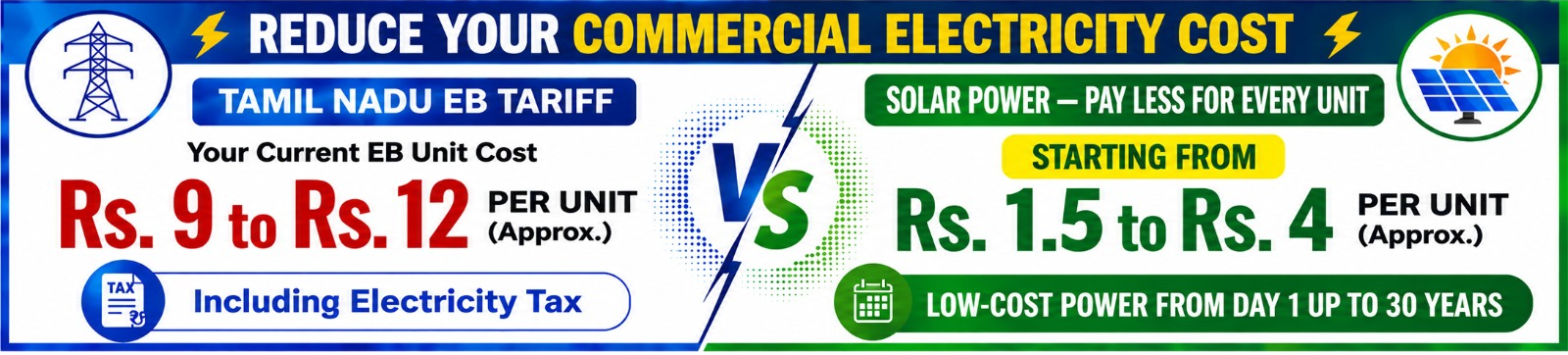
Industrial electricity costs in Tamil Nadu continue to increase because of rising energy demand, grid dependency, and operational consumption patterns across manufacturing and commercial sectors. Textile units, warehouses, industrial parks, and factories are now actively evaluating rooftop solar as a long-term energy cost optimization strategy.
The “resco model solar tamil nadu” approach has become increasingly popular because businesses can adopt rooftop solar without making large capital investments. Under the RESCO structure, the solar developer installs, owns, and operates the rooftop solar system while the industrial consumer purchases electricity through a PowePower Purchase AgreementA).
However, many businesses struggle to understand TANGEDCO approval procedures, Tamil Nadu net metering rules, banking charges, and RESCO policy eligibility.
This guide explains how RESCO solar works in Tamil Nadu, how TANGEDCO regulations affect industrial rooftop solar projects, what businesses should expect during approvals, and how industrial consumers can maximize long-term savings through zero capex solar adoption.
Quick Answer
What Is RESCO Solar in Tamil Nadu?
RESCO solar in Tamil Nadu is a zero upfront investment rooftop solar model where a solar developer installs and operates the solar plant while the business pays only for electricity generated through a long-term solar PPA.
Why Does RESCO Solar Matter?
RESCO solar helps Tamil Nadu industries:
- Reduce electricity costs
- Avoid capital expenditure
- Improve ESG performance
- Stabilize long-term energy pricing
- Outsource solar maintenance responsibility
Who Should Use RESCO Solar?
RESCO solar is ideal for:
- Textile factories
- Manufacturing plants
- Warehouses
- Industrial parks
- Commercial facilities
- Logistics operators
- ESG-focused enterprises
Key Benefits Summary
| Benefit | Impact |
|---|---|
| Zero upfront investment | Preserves working capital |
| Lower electricity costs | Improves operational efficiency |
| No maintenance burden | Simplifies operations |
| Long-term tariff predictability | Improves budgeting |
| Renewable energy adoption | Supports ESG goals |
| Local rooftop utilization | Maximizes unused infrastructure |
What Is RESCO Solar in Tamil Nadu?
RESCO Definition
RESCO stands for Renewable Energy Service Company.
A RESCO developer finances, installs, owns, operates, and maintains a rooftop solar system while the customer purchases electricity generated by the plant through a Power Purchase Agreement.
How Zero Capex Solar Works
Under the RESCO structure:
- The business provides rooftop space.
- The solar developer installs the solar plant.
- The developer owns and maintains the system.
- The customer pays only for electricity consumed.
This model eliminates large upfront solar investment requirements.
How Industrial Solar PPAs Work
A solar PPA defines:
- Electricity tariffs
- Contract duration
- Performance guarantees
- Billing methodology
- Maintenance responsibility
- Exit terms
Industrial rooftop solar PPAs in Tamil Nadu commonly range between 15 and 25 years.
The Ministry of New and Renewable Energy continues to support rooftop solar deployment across commercial and industrial sectors.
RESCO vs CAPEX Solar
| Feature | RESCO | CAPEX |
|---|---|---|
| Upfront investment | Zero | High |
| Ownership | Developer | Customer |
| Maintenance | Developer | Customer |
| Technical risk | Developer | Customer |
| Immediate savings | Yes | Partial |
| Asset ownership | No | Yes |

Understanding TANGEDCO Policies for RESCO Projects
TANGEDCO’s Role in Rooftop Solar
Tamil Nadu Generation and Distribution Corporation regulates:
- Rooftop solar approvals
- Grid synchronization
- Net metering procedures
- Electricity connectivity
- Operational compliance
Industrial rooftop solar projects must comply with TANGEDCO technical and regulatory procedures.
Grid Connectivity and Synchronization Rules
Grid synchronization ensures safe integration between:
- Rooftop solar systems
- Industrial electrical infrastructure
- State electricity distribution networks
Synchronization approvals usually require:
- Electrical inspection
- Technical feasibility review
- Metering verification
- Safety compliance
Industrial Rooftop Solar Approval Requirements
Typical approval requirements include:
- Rooftop ownership documentation
- Electrical load details
- Structural feasibility reports
- System design approvals
- Metering applications
Industrial consumers should prepare documentation early to avoid delays.
Key TNERC Regulations Affecting RESCO Projects
The Tamil Nadu Electricity Regulatory Commission defines several rooftop solar operational frameworks including:
- Net metering rules
- Energy adjustment mechanisms
- Renewable energy regulations
- Grid compliance requirements
Important Compliance Requirements
Industrial businesses should ensure:
- Proper electrical protection systems
- Approved equipment usage
- Synchronization compliance
- Safety standard adherence
Tamil Nadu Net Metering Rules Explained
What Is Net Metering?
Net metering allows industrial consumers to export excess rooftop solar electricity to the grid and offset electricity consumption.
How Net Metering Works for Industrial Consumers
Under net metering:
- Solar electricity is consumed internally first.
- Excess generation is exported to the grid.
- Exported units offset future electricity consumption.
Net metering improves rooftop solar utilization efficiency.
Eligibility Criteria for RESCO Projects
Eligibility depends on:
- Connection type
- Load category
- Rooftop feasibility
- DISCOM regulations
- Metering compatibility
Businesses should verify current policy updates before project planning.
Metering Infrastructure Requirements
Industrial rooftop solar projects generally require:
- Bidirectional meters
- Approved metering systems
- Grid synchronization infrastructure
- Safety disconnect mechanisms
Billing and Energy Adjustment Process
Energy adjustment processes typically involve:
- Monthly meter readings
- Export-import calculations
- Energy banking adjustments
- Tariff reconciliation
Wheeling & Banking Charges for Industrial Solar Projects
What Are Wheeling Charges?
Wheeling charges refer to fees for transmitting electricity through grid infrastructure.
These charges influence overall RESCO project economics.
What Are Banking Charges?
Banking charges apply when surplus solar electricity is stored in the grid for later usage adjustment.
Banking mechanisms help industrial businesses optimize energy utilization.
How Charges Affect RESCO Economics
Wheeling and banking charges directly affect:
- Project savings
- Tariff competitiveness
- Long-term ROI
- Operational energy economics
Businesses should evaluate charges carefully before signing PPAs.
Group Captive + RESCO Hybrid Models
Some industrial businesses combine:
- Group captive structures
- Rooftop RESCO systems
- Open access procurement
Hybrid energy procurement strategies can improve cost optimization.
Cost Optimization Strategies
Industrial businesses can improve economics through:
- Accurate load profiling
- Optimized rooftop utilization
- Smart tariff structuring
- Efficient energy management
Get support for:
Rooftop feasibility
TANGEDCO approvals
Net metering compliance
Solar PPA structuring
Industrial rooftop implementation
Industrial Solar Incentives in Tamil Nadu
State-Level Renewable Energy Initiatives
Tamil Nadu continues to promote renewable energy adoption because of:
- Industrial energy demand
- Sustainability priorities
- Renewable energy targets
MNRE Rooftop Solar Policies
The Ministry of New and Renewable Energy supports rooftop solar expansion through national renewable energy initiatives.
Eligibility of RESCO Projects for Incentives
Incentive eligibility may depend on:
- Consumer category
- Project structure
- Applicable state policies
- Regulatory approvals
Industrial businesses should verify updated policy notifications regularly.
ESG and Sustainability Benefits
RESCO solar helps businesses:
- Reduce carbon emissions
- Improve sustainability reporting
- Support ESG commitments
- Reduce grid dependency
The Bureau of Energy Efficiency promotes industrial energy efficiency and renewable integration.
Operational Savings Potential
Industrial rooftop solar projects in Tamil Nadu often reduce electricity expenses significantly depending on:
- Load profile
- Tariff structure
- Rooftop availability
- Solar generation efficiency
Typical Approval Timeline for RESCO Projects in Tamil Nadu
Site Assessment Stage
The developer evaluates:
- Rooftop suitability
- Shadow analysis
- Structural conditions
- Energy consumption patterns
Technical Feasibility Review
The technical review includes:
- Electrical compatibility
- System sizing
- Safety analysis
- Synchronization planning
TANGEDCO Approval Process
Approval stages commonly include:
- Documentation submission
- Feasibility review
- Metering approval
- Grid synchronization clearance
Approval duration varies depending on project complexity.
Installation and Synchronization
Installation activities include:
- Module installation
- Inverter setup
- Cabling
- Metering integration
- Final synchronization
Realistic Timeline Expectations
Typical industrial RESCO project timelines:
- Feasibility assessment: 1–2 weeks
- Approvals: 4–10 weeks
- Installation: 6–12 weeks
Complex projects may require longer timelines.

Challenges Industrial Businesses Face During Approval
Documentation Delays
Incomplete documentation often delays:
- Technical approvals
- Synchronization permissions
- Metering procedures
Grid Infrastructure Constraints
Grid infrastructure limitations may affect:
- Export approvals
- Load balancing
- System sizing
Approval Coordination Issues
Industrial consumers often struggle with:
- Multiple approval stages
- Technical clarifications
- Utility coordination
Policy Interpretation Challenges
Solar policy interpretation can vary based on:
- Consumer category
- Project structure
- Operational configuration
How NST Solar & Wind Energy Helps Simplify Approvals
NST Solar & Wind Energy supports industrial businesses through:
- Rooftop feasibility evaluation
- Documentation coordination
- TANGEDCO process support
- EPC implementation
- Ongoing O&M services
Case Study: Tamil Nadu Industrial RESCO Project Approval Journey
Client Background
A Tamil Nadu textile manufacturing unit sought to reduce operational electricity costs without making major capital investments.
Energy Cost Challenges
The facility faced:
- Rising industrial tariffs
- High daytime electricity demand
- Budget limitations for infrastructure upgrades
Approval Timeline
| Stage | Timeline |
|---|---|
| Rooftop assessment | 1 week |
| Technical review | 2 weeks |
| TANGEDCO approvals | 6 weeks |
| Installation | 8 weeks |
| Synchronization | 1 week |
Operational Savings Achieved
The facility achieved:
- Significant electricity cost reduction
- Improved tariff predictability
- Enhanced sustainability positioning
Lessons Learned
The project demonstrated the importance of:
- Early documentation preparation
- Local approval expertise
- Accurate rooftop feasibility assessment
Why Businesses Choose NST Solar & Wind Energy for Tamil Nadu RESCO Projects
Chennai-Based Support Team
Local support near Chennai improves:
- Faster site coordination
- Approval support
- Service responsiveness
Industrial Rooftop Solar Expertise
NST Solar & Wind Energy specializes in:
- Industrial rooftop solar
- Commercial solar PPAs
- RESCO implementation
- Long-term maintenance services
TANGEDCO Approval Experience
Local regulatory familiarity helps streamline:
- Documentation
- Synchronization procedures
- Technical coordination
End-to-End EPC and O&M Services
NST provides:
- Engineering
- Procurement
- Construction
- Monitoring
- Preventive maintenance
Transparent PPA Structuring
Transparent tariff structures help businesses evaluate:
- Long-term savings
- Operational economics
- Tariff predictability
Frequently Asked Questions About RESCO Solar in Tamil Nadu
RESCO solar is a zero capex rooftop solar model where a solar developer installs and operates the system while the customer pays only for electricity generated.
Yes. TANGEDCO supports rooftop solar projects subject to applicable technical and regulatory compliance requirements.
Net metering allows industrial consumers to offset electricity usage by exporting excess rooftop solar generation to the grid.
Eligibility depends on policy structure, consumer category, and current regulatory frameworks.
Wheeling charges apply to electricity transmission through the grid, while banking charges apply when surplus electricity is stored for later adjustment.
Industrial rooftop solar approvals in Tamil Nadu commonly require several weeks depending on project complexity and documentation quality.
Yes. Factories and industrial facilities in Chennai frequently adopt rooftop RESCO solar to reduce operational energy costs.
Rooftop size requirements depend on energy demand, system capacity, and available installation area.
Yes. RESCO solar supports renewable energy adoption, carbon reduction, and sustainability reporting initiatives.
11. Key Takeaways
- RESCO solar enables Tamil Nadu industries to adopt rooftop solar with zero upfront investment.
- TANGEDCO approvals and TNERC regulations are critical for industrial rooftop solar implementation.
- Net metering improves energy optimization and electricity savings.
- Wheeling and banking charges influence project economics significantly.
- Tamil Nadu remains one of India’s strongest industrial solar markets.
- Proper documentation and regulatory coordination reduce approval delays.
- Local expertise improves rooftop solar implementation efficiency.
- RESCO solar supports long-term ESG and sustainability goals.
Evaluate:
Electricity savings potential
Rooftop suitability
Regulatory requirements
Long-term solar economics